Garlic has flavored food and inspired folklore for thousands of years. Long before modern medicine existed, people across the world used garlic to treat infections, digestive problems, respiratory illnesses, and a host of other ailments.
Today, scientists continue to study garlic and have discovered that many of its traditional uses may have some basis in reality. While garlic is not a miracle cure, it contains biologically active compounds that may offer a variety of health benefits.
An ancient remedy
Garlic has been used medicinally by civilizations throughout history.
Ancient Egyptian texts mention garlic remedies, while Roman physicians reportedly used it to treat wounds and infections. In India, garlic remains an important part of Ayurveda, and it has long been valued in traditional Chinese medicine as well.
Its popularity was easy to understand. Garlic was inexpensive, widely available, easy to cultivate, and often one of the few remedies accessible to ordinary people.
Although many traditional claims remain difficult to verify, modern research has confirmed that garlic contains compounds with antibacterial, antioxidant, and anti-inflammatory properties.
What makes garlic special?
Many of garlic’s health benefits are linked to sulfur-containing compounds.
When a clove of garlic is crushed, chopped, or chewed, a compound called alliin is converted into allicin. Allicin is responsible for garlic’s distinctive smell and many of its biological effects.
Allicin is relatively unstable and quickly breaks down into other sulfur compounds, including diallyl disulfide (DADS) and diallyl trisulfide (DATS). Researchers believe these compounds contribute to many of garlic’s potential health benefits.
Garlic and cancer research
One of the most active areas of garlic research involves cancer prevention.
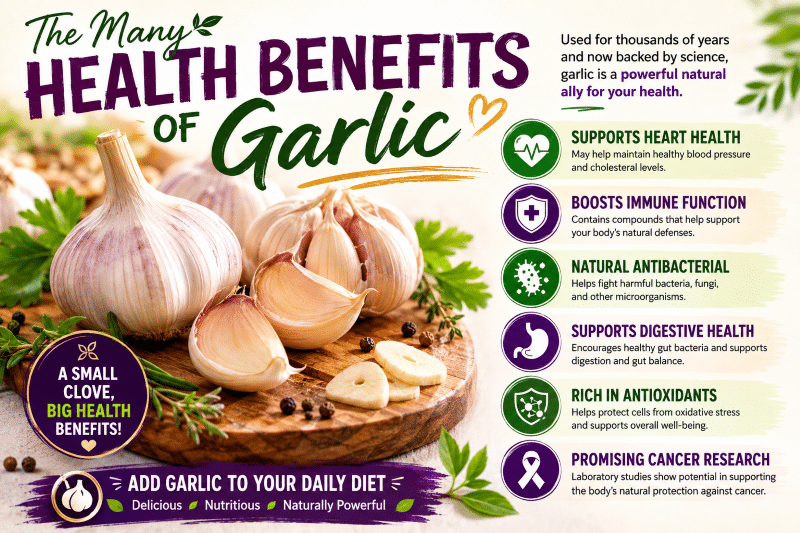
Laboratory and animal studies have shown that compounds found in garlic may influence several processes involved in cancer development, including inflammation, oxidative stress, cell growth, and programmed cell death.
Researchers have reported promising findings involving a variety of cancer cell types, including colorectal, gastric, lung, prostate, and breast cancers. However, most of this evidence comes from laboratory experiments rather than large clinical trials in humans.
While garlic should not be viewed as a treatment for cancer, some researchers believe that regular consumption may contribute to an overall dietary pattern associated with a lower cancer risk.
Other potential health benefits of garlic
Supports heart health
Research suggests that garlic may help support cardiovascular health by contributing to healthy cholesterol levels and blood pressure. Some studies have also found modest improvements in circulation and blood vessel function.
Natural antimicrobial properties
Garlic contains compounds that can inhibit the growth of certain bacteria, fungi, and other microorganisms. This may help explain its long history as a traditional remedy for infections.
Rich in antioxidants
Garlic contains antioxidants that help protect cells from oxidative stress. Oxidative stress has been linked to aging and a variety of chronic diseases.
Supports the immune system
Some studies suggest that garlic may help support normal immune function, potentially reducing susceptibility to common illnesses.
May support digestive health
Garlic may promote the growth of beneficial gut bacteria while helping suppress certain harmful microorganisms.
How to consume garlic
The way garlic is prepared can influence its biological activity.
Because allicin forms when garlic is crushed or chopped, many experts recommend allowing freshly cut garlic to sit for a few minutes before cooking. This gives the enzyme responsible for allicin production time to work.
Cooking can reduce some of garlic’s active compounds, although cooked garlic still provides nutritional value and beneficial plant compounds.
Garlic can be enjoyed in countless ways:
- Crushed into salad dressings
- Added to soups and stews
- Mixed into roasted vegetables
- Blended into sauces and dips
- Consumed as part of a balanced diet
Garlic supplements are also available, although their potency and composition can vary considerably.
The bottom line
Garlic has earned its reputation as one of the world’s most remarkable foods. Rich in sulfur compounds, antioxidants, and other beneficial plant chemicals, it may support heart health, immune function, digestive health, and more.
Although garlic is not a cure for disease, modern research suggests that this ancient plant may offer meaningful health benefits when included regularly in a healthy diet.