
Late Bloomer or Dyslexia? – Ask Sue
Many parents wonder if a struggling reader is simply a late bloomer or showing signs of dyslexia. In this “Ask Sue,” Karen asks about her 8-year-old son, and Sue explains the key differences, early red flags, and why timely intervention makes all the difference.
How Is Dyslexia Diagnosed?
A dyslexia diagnosis requires a full evaluation, not just a single test. Learn what’s involved in screening and assessment, who can diagnose dyslexia, and the steps you can take to support your child afterward.
My 10-year-old Argues About Everything – Ask Sue
Many parents worry when a 10-year-old argues about clothes, chores, and bedtime. The pushback is often a normal bid for independence, but it doesn’t have to become a war. Learn how to pick your battles, set clear limits, offer choices, and keep your cool—so your child practices healthy independence while your home stays peaceful.
Orthographic Dyslexia: Symptoms, Causes, Intervention – Ask Sue

Orthographic dyslexia, also called surface dyslexia, affects children who cannot easily recognize words by sight. This article explains the symptoms, causes, and the role of the brain’s visual word form area, as well as interventions that strengthen visual memory and rapid recall to improve reading.
Struggling with Math Facts: Dyscalculia or Just Behind? – Ask Sue
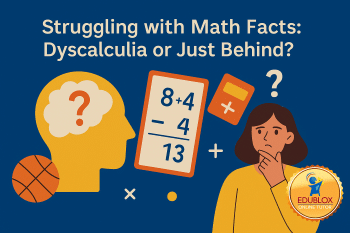
Michael asks whether his 9-year-old daughter’s struggles with multiplication mean she’s just behind or showing signs of dyscalculia. In this “Ask Sue,” we explore the difference between a learning delay and a learning difficulty, the red flags to watch for, and why early support matters.
Reads Beautifully but Understands Nothing – Ask Sue
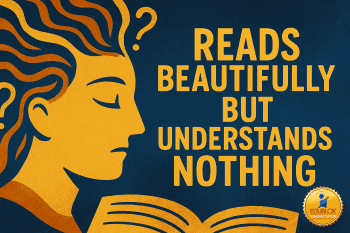
Anna shares her worry about her 10-year-old son, who reads aloud with expression but cannot recall or explain what he has read. In this “Ask Sue,” we explore the main reasons why comprehension fails, and why a consultation and assessment are the best next steps.
Phonemic Awareness: What It Is, Its Role in Reading, Training
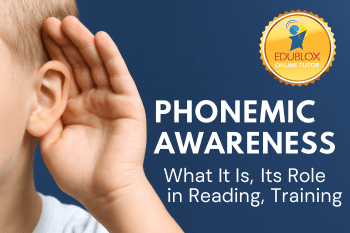
Phonemic awareness is often called the key to reading success. This article defines it, explores how it connects to decoding and fluency, and reviews research on training. Learn why Edublox supports basic skills but cautions against relying on advanced drills alone — and why children need a broader foundation.
A Comprehensive History of Dyslexia
The history of dyslexia starts in 1877, nearly 150 years ago, with Adolph Kussmaul. Learn about the roles played by Berlin, Kerr, Morgan, Hinshelwood, Orton, Strauss and Werner, Lehtinen, Kirk, the Education for All Handicapped Children Act, and more.
Why Does My Child Take Forever to Do Homework? – Ask Sue

When homework takes hours instead of minutes, it’s rarely laziness. Sue uncovers how processing speed, attention, and weak sequencing slow children down — and how to make study time manageable.
Why Does My Child Hate Writing So Much? – Ask Sue

An 11-year-old who spins vivid stories aloud avoids writing at all costs. Sue explains why visual memory, visual processing, and fine motor skills matter — and how to turn writing from a battle into a bridge for creativity.
19 Learning Disabilities Success Stories from Real Families

Real families share how children with learning disabilities — including reading, writing, math, and ADHD — made life-changing progress.
My 16-Year-Old Has Dyscalculia — Is It Too Late? – Ask Sue
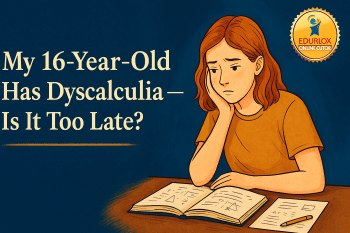
A 16-year-old with dyscalculia feels overwhelmed and left behind in math. Sue shows why strengthening cognitive skills and core foundations — before adding geometry, measurement, and data — gives struggling teens hope and a clear path forward.