Looking for a nutritious snack that satisfies hunger while delivering a powerful nutritional boost? Sunflower seeds may be just what you need. With their mild, nutty flavor and satisfying crunch, these tiny seeds are packed with vitamins, minerals, healthy fats, and antioxidants.
Here are five impressive health benefits of sunflower seeds.
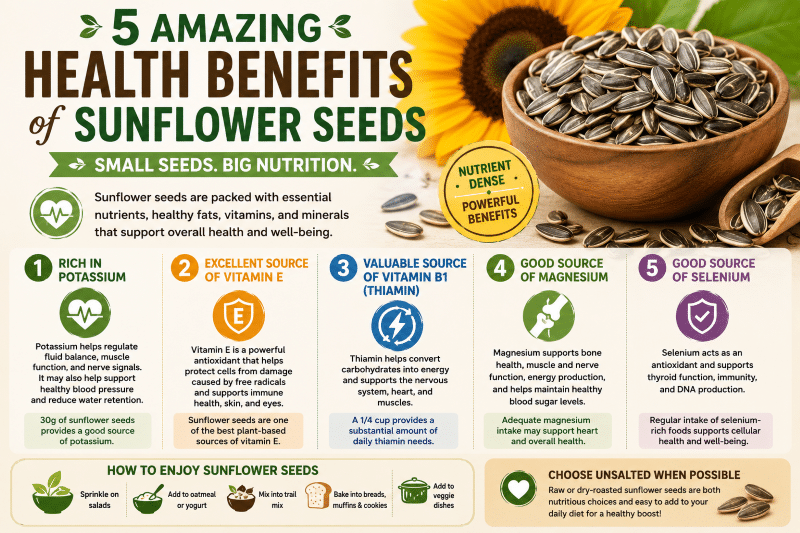
1. Rich in potassium
Potassium is an essential mineral that helps regulate fluid balance, muscle contractions, and nerve signals throughout the body. It also plays an important role in maintaining healthy blood pressure.
A diet rich in potassium may help counteract some of the effects of excess sodium, supporting heart health and reducing the risk of high blood pressure.
While bananas are often associated with potassium, sunflower seeds are also a good source. A 30-gram serving of sunflower seeds provides a meaningful amount of this important mineral while contributing very little sodium when unsalted.
Low potassium levels may contribute to fatigue, muscle weakness, cramps, and constipation, making potassium-rich foods an important part of a balanced diet.
2. An excellent source of vitamin E
Sunflower seeds are one of the richest natural sources of vitamin E, a powerful antioxidant that helps protect cells from damage caused by free radicals.
Because vitamin E is fat-soluble, it helps protect cell membranes and other fat-containing structures throughout the body. Researchers believe vitamin E may contribute to healthy aging by reducing oxidative stress, which has been linked to a variety of chronic diseases.
Vitamin E also plays an important role in immune function and supports healthy skin, eyes, and blood vessels.
Adding a handful of sunflower seeds to your daily diet is an easy way to boost your intake of this important nutrient.
3. A valuable source of vitamin B1 (thiamin)
Vitamin B1, also known as thiamin, is an essential member of the B-vitamin family.
Thiamin helps the body convert carbohydrates into energy and plays a critical role in the functioning of the nervous system, muscles, and heart. Because only small amounts are stored in the body, regular dietary intake is important.
Sunflower seeds rank among the best food sources of thiamin. Just a quarter-cup serving provides a substantial portion of the daily recommended intake.
Adequate thiamin intake supports normal energy metabolism and helps ensure that the body’s cells can efficiently use the nutrients obtained from food.
4. A good source of magnesium
Magnesium is involved in hundreds of biochemical reactions in the body. It contributes to normal muscle and nerve function, supports bone health, helps regulate blood sugar levels, and plays a role in energy production.
Approximately 60 percent of the body’s magnesium is stored in the bones, with the remainder found in muscles, soft tissues, and bodily fluids.
Research suggests that diets rich in magnesium are associated with a lower risk of high blood pressure and may support overall cardiovascular health. Magnesium also plays a role in muscle relaxation and normal nervous system function.
People who do not consume enough magnesium may experience symptoms such as muscle cramps, fatigue, headaches, or difficulty sleeping.
5. A good source of selenium
Sunflower seeds provide selenium, a trace mineral essential to human health.
Selenium acts as an antioxidant, helping protect cells from oxidative damage. It also supports thyroid function, immune health, and normal DNA production.
Researchers have long been interested in the relationship between selenium and chronic disease. While selenium is not a cure or preventive treatment for cancer, adequate intake appears to play an important role in maintaining healthy cellular function.
Because selenium is required only in small amounts, regularly consuming foods such as sunflower seeds can help support overall health.
How to enjoy sunflower seeds
Sunflower seeds are remarkably versatile and easy to include in your diet. Try them:
- Sprinkled on salads
- Mixed into oatmeal or yogurt
- Added to homemade trail mix
- Baked into breads, muffins, and cookies
- Tossed into vegetable dishes for added crunch
Raw and dry-roasted sunflower seeds are both nutritious choices. When possible, choose unsalted varieties to limit added sodium.
The bottom line
Sunflower seeds may be small, but they are packed with nutrition. Rich in potassium, vitamin E, thiamin, magnesium, and selenium, they provide an impressive array of nutrients that support overall health.
Whether enjoyed as a snack or added to meals, sunflower seeds are an easy and delicious way to boost your intake of important vitamins, minerals, antioxidants, and healthy fats.