Cinnamon has long been celebrated as a sweet, warming spice that transforms ordinary dishes into aromatic delights. But beyond its culinary appeal, cinnamon has attracted considerable scientific interest for its potential health benefits.
Used in traditional medicine for thousands of years and increasingly studied by modern researchers, cinnamon contains a variety of plant compounds that may support health in numerous ways. While it is not a cure-all, adding cinnamon to a balanced diet may offer several advantages.
Here are ten science-backed reasons to appreciate this ancient spice.
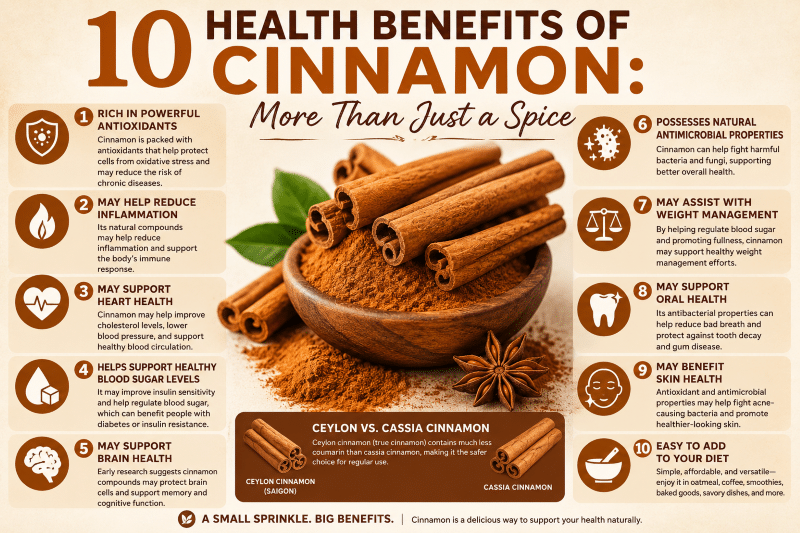
1. Rich in powerful antioxidants
Cinnamon is rich in antioxidants, particularly polyphenols, which help protect the body against oxidative stress. Oxidative stress occurs when unstable molecules called free radicals damage cells and tissues, contributing to aging and chronic disease.
Research suggests that cinnamon is among the most antioxidant-rich spices. These antioxidants help neutralize free radicals and may help protect the heart, brain, and other organs from long-term damage.
2. May help reduce inflammation
Inflammation is a normal part of the body’s immune response. However, chronic inflammation has been linked to conditions such as heart disease, arthritis, diabetes, and certain cancers.
Cinnamon contains compounds, including cinnamaldehyde, that have demonstrated anti-inflammatory effects in laboratory and animal studies. While more human research is needed, incorporating cinnamon into a healthy diet may help support the body’s natural defenses against excessive inflammation.
3. May support heart health
Heart disease remains the leading cause of death worldwide, making heart-healthy dietary choices especially important.
Some studies suggest that cinnamon may help improve several cardiovascular risk factors, including cholesterol levels, triglycerides, and blood pressure. Its antioxidant and anti-inflammatory properties may also support healthy blood vessels and circulation.
Although cinnamon should not be viewed as a treatment for heart disease, it can be part of an overall heart-healthy eating pattern.
4. Helps support healthy blood sugar levels
One of cinnamon’s most widely studied benefits is its potential to support healthy blood sugar levels.
Research suggests that cinnamon may improve insulin sensitivity, enabling cells to use glucose more efficiently. Some studies have also found that cinnamon may reduce blood sugar spikes after meals.
For individuals with type 2 diabetes or insulin resistance, cinnamon may be a helpful addition to a healthy diet. However, it should never replace prescribed medications or medical advice.
5. May support brain health
Scientists have become increasingly interested in cinnamon’s potential neuroprotective properties.
Early laboratory and animal studies suggest that certain compounds in cinnamon may help protect brain cells and influence processes involved in age-related cognitive decline. Researchers have also explored cinnamon’s possible role in supporting memory and learning.
Although these findings are promising, more human studies are needed before firm conclusions can be drawn.
6. Possesses natural antimicrobial properties
For centuries, cinnamon has been used as a natural preservative. Modern research has shown that cinnamon contains compounds that can inhibit the growth of certain bacteria, fungi, and other microorganisms.
Cinnamon oil, in particular, has demonstrated antimicrobial activity against a variety of pathogens. These properties help explain why cinnamon has historically been used in food preservation and traditional medicine.
7. May assist with weight management
Maintaining a healthy weight depends on many factors, including diet, exercise, sleep, and genetics. Cinnamon is not a weight-loss miracle, but it may support healthy eating habits.
By helping support healthy blood sugar levels, cinnamon may reduce cravings and help people feel satisfied for longer periods. Some research also suggests that cinnamon may slow stomach emptying, thereby contributing to feelings of fullness.
8. May support oral health
Cinnamon’s antimicrobial properties may also benefit the mouth.
Studies have found that compounds in cinnamon can help inhibit bacteria associated with bad breath, tooth decay, and gum disease. This is one reason cinnamon is often included in chewing gums, mouthwashes, and dental products.
Good oral hygiene remains essential, but cinnamon may provide an additional layer of support.
9. May benefit skin health
The antioxidant and antimicrobial properties of cinnamon have led researchers to investigate its potential role in skin health.
Some skincare products contain cinnamon extracts because of their ability to combat certain bacteria and support healthy skin. However, cinnamon can also irritate sensitive skin, so topical use should be approached cautiously.
Most people are likely to benefit more from consuming cinnamon as part of a healthy diet than from applying it directly to the skin.
10. Easy to add to your diet
One of cinnamon’s greatest advantages is its versatility.
Unlike many health supplements, cinnamon is inexpensive, widely available, and easy to incorporate into everyday meals. It can be sprinkled on oatmeal, fruit, yogurt, or coffee, blended into smoothies, or used in baked goods, curries, and stews.
This makes it simple to enjoy cinnamon’s potential benefits without making major changes to your lifestyle.
Ceylon vs. Cassia Cinnamon
Not all cinnamon is the same.
Cassia cinnamon is the most common type sold in supermarkets and is generally less expensive. However, it contains higher levels of coumarin, a naturally occurring compound that may be harmful to the liver when consumed in large amounts over long periods.
Ceylon cinnamon, often called “true cinnamon,” contains much lower levels of coumarin and is generally considered the better choice for regular use.
A note of caution
Cinnamon is generally safe when consumed in the amounts commonly found in foods.
However, consuming large amounts—particularly of cassia cinnamon—or taking high-dose supplements may cause problems in some individuals. People with liver disease, those taking blood-thinning medications, and anyone considering cinnamon supplements should consult a healthcare professional first.
As with many good things in life, moderation is key.
The bottom line
Cinnamon is far more than a flavorful spice. Rich in antioxidants and beneficial plant compounds, it may help support heart health, blood sugar control, brain function, oral health, and more.
While cinnamon is not a substitute for a healthy lifestyle or medical treatment, it is an easy and enjoyable way to add a little extra nutritional value to your diet. A sprinkle on your morning oatmeal or coffee may not seem like much, but over time, small healthy habits can make a meaningful difference.