
Overcoming Dyscalculia Symptoms: 6 Tried and Tested Steps
Developmental dyscalculia affects 3–10% of students and can severely impact math learning. This article outlines six proven steps — from step-by-step teaching and multi-sensory methods to reducing anxiety and embracing mistakes — to help students succeed in mathematics.
Dyscalculia Statistics and Prevalence: How Common Is It?
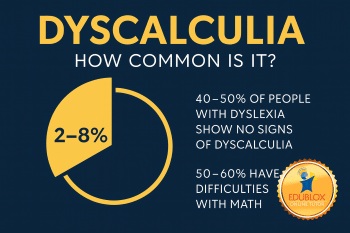
How common is dyscalculia? Research suggests that between 2% and 8% of children are affected, but definitions matter. Some experts argue the true prevalence may be closer to 2%. Discover what the studies reveal, how rates are measured, and why awareness lags behind dyslexia.
Watch: Double Deficit Dyslexia Success Story
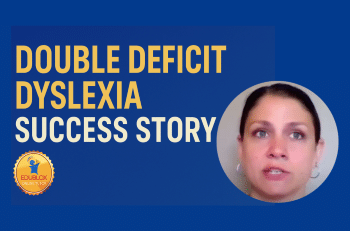
Cristiano, bright and creative, struggled with reading. Despite his intelligence and strong comprehension skills, he found it incredibly difficult to read fluently, recognize common words, or spell accurately. Words just didn’t “stick.” A comprehensive neurocognitive evaluation revealed the reason: Cristiano had double deficit dyslexia.
Dyslexia Symptoms, Early Warning Signs, and Risk Factors
What are the symptoms of dyslexia? Learn how to recognize eight core dyslexia symptoms, spot early warning signs before school starts, understand key risk factors, and explore proven ways to support your child’s reading journey.
From Struggle to Success: What Two Students Taught Us About Dyscalculia
Maddie and Hannah’s progress reshaped how Edublox approaches dyscalculia. Their stories show how the right learning principles can unlock math success.
What Are the 12 Types of Dyslexia?
This article explores 12 types of dyslexia, including primary, secondary, developmental, acquired, phonological, surface, deep, and rare subtypes. Learn how each affects reading and how targeted help can make a difference.
Double Deficit Dyslexia: A Severe Reading Impairment
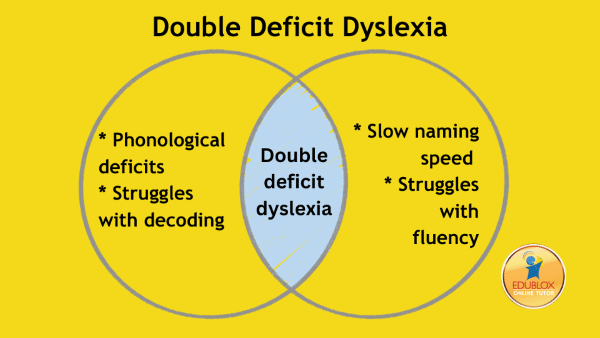
Dyslexia is now recognized as a heterogeneous learning disorder with multiple subtypes. One of the most extensively studied—and arguably the most challenging—is double deficit dyslexia. This subtype is marked by impairments in both phonological processing and rapid automatized naming (RAN), and it is associated with more severe and persistent reading difficulties than other forms of dyslexia.
How to Explain Dyscalculia to Children
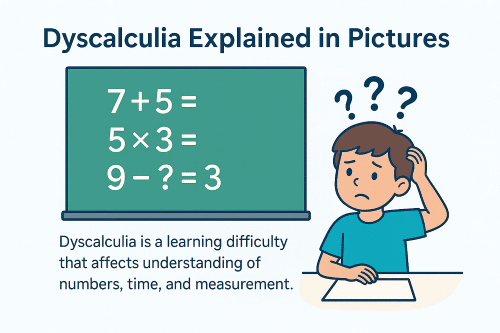
Sometimes it’s hard for children to understand why math feels so confusing. This picture story is designed for parents and teachers to use with their child or student.
Dyscalculia Treatment & Intervention: 5 Strategies that Work
Dyscalculia treatment requires more than practice drills. This article outlines five effective, research-backed strategies that help children build foundational skills, reduce anxiety, and overcome math learning barriers.
Severe Dyslexia: A Deep Look into One of the Most Complex Learning Challenges
Dyslexia is a common reading disorder, but severe dyslexia is in a class of its own. It involves not just difficulty with reading but a deep disruption in the brain systems responsible for connecting sounds to letters, recognizing words quickly, and processing language efficiently.
The Emotional Scars of Dyslexia — and How to Heal Them
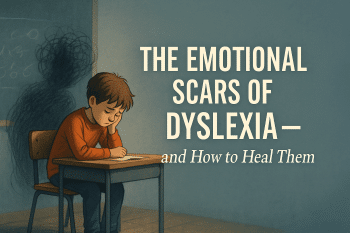
Dyslexia and learning challenges affect more than grades. They shape self-worth, fuel anxiety, and leave invisible scars. But with the right help, healing is possible.
What Are Factors? How to Find Them

Factors are fundamental building blocks used to understand and solve various problems in mathematics. A factor of a number is a number that divides into that number without leaving a remainder. This concept goes beyond simple arithmetic, playing an important role in fields like algebra, number theory, and real-world applications.