Free Consultation

LD Articles, Resources and Success Stories

Dyslexia Treatment Program for Children

Discover a comprehensive, research-informed approach to dyslexia treatment that goes beyond phonics. This four-pillar model integrates structured instruction, cognitive training, targeted brain development, and foundational learning principles to help children overcome reading challenges.

Read more...

Are People with Dyslexia More Creative and Visually Gifted?

Two large meta-analyses examined whether dyslexia is linked to higher creativity or stronger visual-spatial skills. The results? Dyslexic individuals showed no consistent advantage in either area, though more variability was seen in visual-spatial tasks. The popular claims don’t hold up under scientific scrutiny.

Read more...

Can Dyslexia Be Cured?

Dyslexia is often described as a lifelong condition — but what does that really mean? This article explores whether targeted instruction and cognitive training can lead to a “functional cure” for many learners.

Read more...

How Is Dyslexia Diagnosed?

A dyslexia diagnosis requires a full evaluation, not just a single test. Learn what’s involved in screening and assessment, who can diagnose dyslexia, and the steps you can take to support your child afterward.

Read more...

Phonemic Awareness: What It Is, Its Role in Reading, Training

Phonemic awareness is often called the key to reading success. This article defines it, explores how it connects to decoding and fluency, and reviews research on training. Learn why Edublox supports basic skills but cautions against relying on advanced drills alone — and why children need a broader foundation.

Read more...

A Comprehensive History of Dyslexia

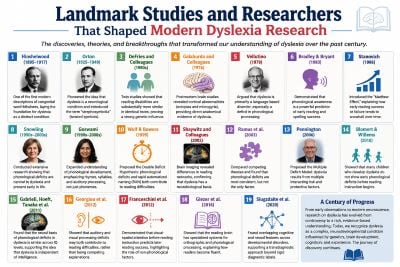
The history of dyslexia starts in 1877, nearly 150 years ago, with Adolph Kussmaul. Learn about the roles played by Berlin, Kerr, Morgan, Hinshelwood, Orton, Strauss and Werner, Lehtinen, Kirk, the Education for All Handicapped Children Act, and more.

Read more...

Dyslexia Hub

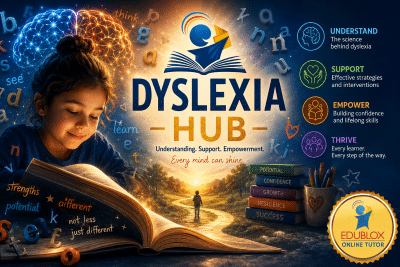
The Dyslexia Hub is your central guide to understanding, identifying, and supporting learners with reading difficulties. Organized into clear sections — from foundations and symptoms to causes, treatment, impact, and research — it offers parents, teachers, and professionals a trusted pathway through the many facets of dyslexia.

Read more...

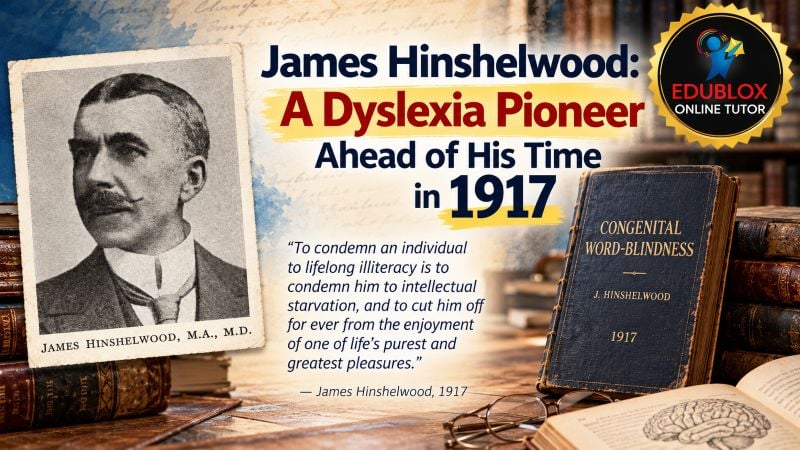
Dyslexia: Biography of James Hinshelwood

James Hinshelwood is considered the father of the study of dyslexia. Long before the term neuroplasticity was coined, he recognized that the brain could adapt through systematic instruction. His groundbreaking work on “congenital word-blindness” anticipated much of modern understanding about dyslexia, making him one of the most visionary figures in the history of reading science.

Read more...

17 Dyslexia Success Stories from Real Families

Not all dyslexia success stories involve celebrities. These real-life stories of ordinary children and teens overcoming reading struggles prove that with the right support, progress is possible.

Read more...

Directional Confusion May Be a Sign of Dyslexia

Directional confusion is a common symptom of dyslexia that affects reading, writing, and spatial awareness. Learn how problems with left–right orientation and position in space develop, and how they impact learning.

Read more...

Video: Mixed Dyslexia – Signs, Causes, and Treatment

Mixed dyslexia, also known as double-deficit dyslexia, is a severe form marked by difficulties with both phonological processing and naming speed. Students often struggle with decoding and fluency, reading at the lowest percentiles. Edublox provides personalized cognitive training and online reading instruction to help children worldwide succeed.

Read more...

Video: What Is Neuroplasticity and Why Does It Matter for Dyslexia?

Neuroplasticity—also known as brain plasticity—is the brain’s ability to reorganize and adapt by forming new neural connections. This lifelong process underlies learning, memory, and recovery, and offers real hope for overcoming dyslexia. Discover why neuroplasticity matters in helping children with dyslexia learn and thrive.

Read more...
Contact Us