
Broccoli doesn’t always get the love it deserves. Some people see it as the boring green stuff parents forced onto their plates; others can’t get enough of it roasted with olive oil and garlic. Either way, this crunchy veggie is a nutrition superstar. It’s packed with compounds that do more than just “keep you healthy” in a vague sense. They actively protect your heart, bones, gut, and even your eyesight.
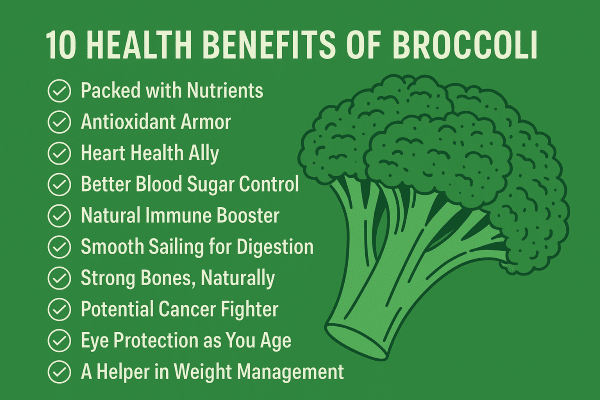
Here are ten solid, science-backed reasons to keep broccoli in your weekly rotation.
1. Nutrient-dense without the calories
A cup of raw broccoli gives you a serious nutrition hit—vitamin C, vitamin K, vitamin A, folate, potassium, and fiber—yet it clocks in at under 35 calories. It’s basically a multivitamin disguised as a vegetable. That means you can enjoy generous portions without guilt, while still meeting a significant portion of your daily nutrient needs.
2. Antioxidant armor
Broccoli belongs to the cruciferous family (think cauliflower, kale, Brussels sprouts). These veggies are rich in antioxidants, and broccoli’s star compound is sulforaphane. That name doesn’t sound glamorous, but sulforaphane helps neutralize free radicals—the unstable molecules that speed up aging and damage cells. In other words, broccoli helps protect your body from the inside out.
3. Heart health ally
Your heart likes broccoli more than you might. The fiber in broccoli helps sweep out excess cholesterol, while sulforaphane keeps blood vessels flexible and reduces inflammation. Researchers have even linked regular broccoli consumption to a lower risk of heart disease. So, that side of broccoli with dinner? It’s not just filler—it’s fuel for your cardiovascular system.
4. Better blood sugar control
Broccoli is a friend to anyone watching their blood sugar. The combo of fiber (which slows down digestion) and sulforaphane (which improves insulin sensitivity) helps keep glucose levels steady. No rollercoaster spikes, no crashes. This is particularly good news for people with type 2 diabetes, but it benefits everyone. Even if you do not have diabetes, balanced blood sugar means steadier energy and fewer mid-afternoon slumps.
5. A natural immune booster
We’ve all heard about oranges and vitamin C, but broccoli quietly matches (and sometimes beats) them. Just one cup gives you your daily vitamin C requirement, plus extra nutrients like zinc and beta-carotene. All of these support white blood cells, which are your body’s frontline defenders against germs. Broccoli soup in winter? That’s not just comfort food—it’s a smart strategy.
6. Smooth sailing for digestion
If your digestion is sluggish, broccoli might help get things moving. Its fiber—both soluble and insoluble—keeps your gut happy. Insoluble fiber adds bulk to stool, while soluble fiber feeds the good bacteria in your intestines. A healthy gut microbiome isn’t just about digestion; research links it to better immunity and even better moods.
7. Strong bones, naturally
Dairy gets all the credit for bone health, but broccoli holds its own. It’s got calcium, vitamin K, magnesium, and phosphorus—the full bone-strengthening package. If you don’t do dairy, broccoli is a fantastic way to protect bone density and lower your risk of osteoporosis as you age. It’s like a natural bone insurance policy.
8. Potential cancer fighter
This is the benefit that put broccoli on the map. Cruciferous veggies like broccoli contain compounds that help your body detoxify potential carcinogens. Sulforaphane again shows up here, interfering with the growth of abnormal cells and lowering inflammation. Research suggests broccoli may help reduce the risk of breast, prostate, and colorectal cancers. No food is a magic bullet, but broccoli is about as close as vegetables get.
9. Eye protection as you age
Your eyes benefit too. Broccoli is rich in lutein and zeaxanthin, two carotenoids that protect your retinas from oxidative stress. They’re basically natural sunglasses for your eyes, helping defend against macular degeneration and cataracts. Plus, the vitamin A supports good night vision—handy if you hate fumbling for the light switch in the dark.
10. A helper in weight management
Broccoli fills you up without filling you out. High in fiber and water, it slows digestion and keeps you satisfied longer. This means you’re less likely to reach for snacks an hour after dinner. And because it’s so low in calories, you can eat large servings without sabotaging your goals. Add roasted broccoli to your meals, and you’ll notice the difference in satiety.
Cooking tip: Don’t kill the nutrients
One catch—how you cook broccoli matters. Boiling it for too long leaches out water-soluble vitamins and reduces its antioxidant punch. Light steaming, roasting, or stir-frying keeps its crunch and preserves more of the good stuff. Raw broccoli is also great, especially tossed into salads or paired with hummus for a quick snack.
Final thoughts
Broccoli may not be the most glamorous veggie, but it’s one of the most powerful. It fuels your body with vitamins, supports your immune system, strengthens bones, protects your heart, balances blood sugar, and may even help reduce cancer risk.
So the next time you see broccoli at the store, don’t pass it by. Grab a head, get creative with your cooking, and enjoy the long list of benefits it quietly delivers.