
The orange has been called “liquid sunshine,” and with good reason. Sweet, juicy, and vibrant in color, this citrus fruit has traveled the world for centuries, making its way from ancient China to Mediterranean groves and modern grocery stores. But beyond its delicious taste, the orange is a nutritional powerhouse. Packed with vitamin C, fiber, antioxidants, and unique plant compounds, oranges deliver a range of health benefits that science continues to uncover.
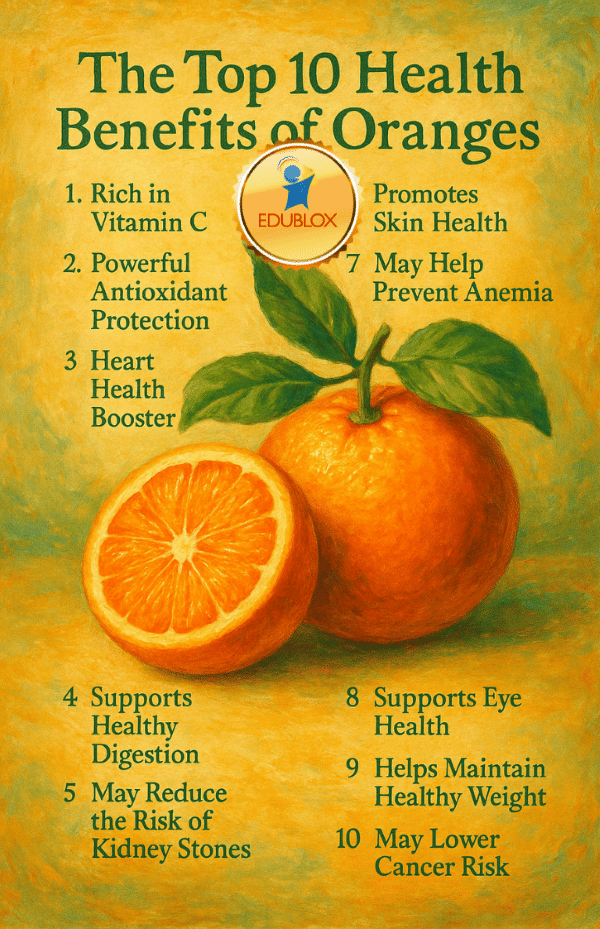
Here are the top ten health benefits of oranges — and why making them a regular part of your diet is one of the simplest health upgrades you can make.
1. Strengthens the immune system
Vitamin C is the most famous nutrient in oranges, and for good reason. One medium orange provides over 100% of the daily recommended intake. Vitamin C supports immune defense by stimulating white blood cells, enhancing antibody production, and helping the body repair tissues. A review published in Nutrients (2017) concluded that vitamin C reduces the severity and duration of respiratory infections, even if it doesn’t prevent them entirely.
2. Provides powerful antioxidant protection
Oranges are loaded with antioxidants — not only vitamin C but also flavonoids, carotenoids, and polyphenols. Antioxidants combat oxidative stress, a process linked to aging and chronic diseases. For example, the flavonoid hesperidin has been shown to reduce inflammation and protect cells from DNA damage. Regular consumption of oranges may help lower the risk of conditions like heart disease, type 2 diabetes, and neurodegenerative disorders.
3. Supports heart health
Heart disease remains the world’s leading cause of death, and diet plays a central role in prevention. Oranges support cardiovascular health in several ways:
- Potassium helps regulate blood pressure by balancing sodium levels.
- Soluble fiber (especially pectin) lowers LDL cholesterol, often referred to as “bad” cholesterol.
- Hesperidin, found in orange juice and pulp, improves blood vessel flexibility and reduces inflammation.
A large cohort study in the American Journal of Clinical Nutrition (2012) found that higher citrus fruit intake was associated with reduced risk of ischemic stroke, especially among women.
4. Aids healthy digestion
Dietary fiber is critical for digestive health, and oranges deliver about 3 grams per medium fruit. Fiber prevents constipation, supports healthy bowel movements, and feeds beneficial gut bacteria. A healthy gut microbiome has been linked to improved immunity, mental health, and weight management. Whole oranges are far superior to juice in this regard, as most of the fiber is lost in juicing.
5. May prevent kidney stones
Kidney stones, often made of calcium oxalate, are painful and can recur without preventive measures. Citrus fruits like oranges increase urinary citrate levels, which help prevent stone formation by binding calcium. A study published in BJU International (2003) reported that orange juice consumption raised urinary citrate levels significantly, suggesting a protective effect against stone development.
6. Promotes healthy skin
The cosmetic industry may sell expensive creams, but nature provides its own skin-boosting solution: vitamin C. This vitamin is essential for collagen production, which helps maintain skin elasticity and wound healing. Antioxidants in oranges also protect skin from UV-induced damage. A study in The American Journal of Clinical Nutrition (2007) found that higher dietary vitamin C intake was associated with better skin aging appearance — fewer wrinkles and less dryness.
7. Improves iron absorption and helps prevent anemia
Oranges themselves are not iron-rich, but they play a vital supporting role. Vitamin C enhances the absorption of non-heme iron, the type found in plant foods. Pairing oranges with iron-rich foods — think spinach salad with orange slices or lentils with a glass of orange juice — helps the body absorb more iron, lowering the risk of iron-deficiency anemia.
8. Protects eye health
Oranges contain carotenoids like beta-carotene, lutein, and zeaxanthin, all known to support eye health. These compounds protect the retina from oxidative stress and filter harmful blue light. Research from the American Journal of Clinical Nutrition (2018) found that people who consumed oranges regularly had a lower risk of age-related macular degeneration (AMD). Vitamin C also supports healthy blood vessels in the eyes, further reducing risk of vision loss.
9. Supports weight management
Trying to maintain a healthy weight? Oranges can help. They are low in calories (around 60 calories per medium fruit) yet high in water and fiber. This combination promotes satiety, helping you feel full for longer. Compared to sugary snacks, oranges satisfy cravings without spiking blood sugar. Choosing whole fruit over juice is key, since juice lacks fiber and can lead to overconsumption of calories.
10. May lower cancer risk
Several studies suggest that diets rich in citrus fruits are linked to a lower risk of certain cancers, including stomach, esophageal, and oral cancers. The anti-cancer effects are attributed to vitamin C, antioxidants, and flavonoids that inhibit tumor growth and support DNA repair. A meta-analysis in Medicine (2015) concluded that citrus fruit consumption was inversely associated with esophageal cancer risk. While no single food prevents cancer, oranges contribute to a protective dietary pattern.
Key takeaway
From boosting immunity and protecting the heart to supporting skin, eyes, and digestion, oranges deliver a spectrum of health benefits in one sweet, juicy package. They’re convenient, versatile, and affordable — whether eaten fresh, tossed into salads, blended into smoothies, or juiced.
The next time you peel an orange, remember that you’re not just enjoying a refreshing snack; you’re nourishing your body with a fruit backed by centuries of tradition and decades of scientific research.
Edublox offers cognitive training and live online tutoring for students with dyslexia, dysgraphia, dyscalculia, and other learning challenges. We work with learners in the United States, Canada, Australia, and around the world. Book a free consultation today to discuss your child’s needs and explore how we can help them succeed.
References for The Top 10 Health Benefits of Oranges:
- Aune, D., et al. (2017). Fruit and vegetable intake and the risk of cardiovascular disease, total cancer and all-cause mortality—a systematic review and dose-response meta-analysis of prospective studies. International Journal of Epidemiology, 46(3), 1029–1056.
- Cosgrove, M. C., Franco, O. H., Granger, S. P., Murray, P. G., & Mayes, A. E. (2007). Dietary nutrient intakes and skin-aging appearance among middle-aged American women. American Journal of Clinical Nutrition, 86(4), 1225–1231.
- Heffernan, A., Evans, C., Holmes, M., & Moore, J. B. (2017). The regulation of dietary iron bioavailability by vitamin C: A systematic review and meta-analysis. Proceedings of the Nutrition Society, 76(OCE4), E182. N., et al.
- Liu, R. H. (2013). Health-promoting components of fruits and vegetables in the diet. Advances in Nutrition, 4(3), 384S–392S.
- van Leeuwen, R., Boekhoorn, S., Vingerling, J. R., Witteman, J. C. M., Klaver, C. C. W., Hofman, A., & de Jong, P. T. V. M. (2005). Dietary intake of antioxidants and risk of age-related macular degeneration. JAMA, 294(24), 3101–3107.
- Zhao, W., Liu, L., & Xu, S. (2018). Intakes of citrus fruit and risk of esophageal cancer: A meta-analysis. Medicine, 97(13), e0018.