
Dear Sue,
My child is in 6th grade and was recently tested—his reading score came back as “on par for his age.” He has no cognitive deficits. But at home, he still struggles with fluency and often stumbles over common words I thought he’d know by now. The truth is, he never reads unless he absolutely has to. What’s going on?
Tanya
Dear Tanya
Ah yes—this is more common than you might think. The key lies in something tests don’t always reveal: reading stamina, automaticity, and sight word recognition come from regular reading habits, not just test-day performance.
If a child doesn’t read much outside of testing, their exposure to print is limited—meaning their brain isn’t getting the repetition it needs to automatically recognize words. So even if they can read (and test well when prompted), they may still struggle to read fluently in everyday situations.
This has everything to do with how sight words are formed. For the brain to store a word in its visual word form area, it needs to see that word in print again and again. Sporadic reading just doesn’t give the brain enough of those exposures.
A child who reads frequently can see over 1 million words a year. One who rarely reads might see 100,000 or fewer. That’s a massive gap—and it explains why two kids with the same test scores can have very different reading experiences.
Here’s a simple graphic that makes it crystal clear:
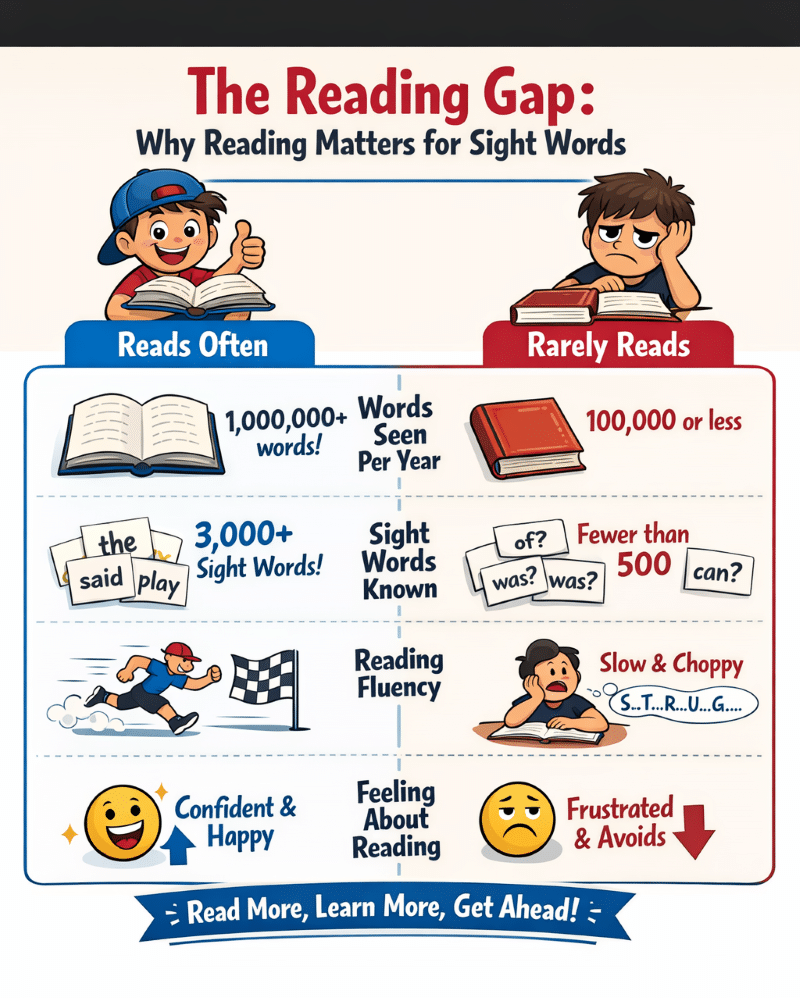
The solution? Encourage consistent, voluntary reading—books they want to read, on topics they enjoy. It’s not about forcing more “schoolwork;” it’s about building the habit that makes reading easier and more automatic over time.
Sue
More about Sue
Sue is an educational specialist in learning difficulties with a B.A. Honors in Psychology and a B.D. degree. Early in her career, Sue was instrumental in training over 3,000 teachers and tutors, providing them with the foundational and practical understanding to facilitate cognitive development among children who struggle to read and write. With over 30 years of research to her name, she conceptualized the Edublox teaching and learning methods that have helped thousands of children worldwide. In 2007, she opened the first Edublox reading and learning clinic; today, there are 30 clinics internationally. Sue treasures the “hero” stories of students whose self-esteem soars as their marks improve.