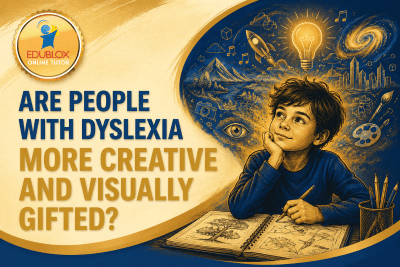
Many believe that people with dyslexia are naturally more creative or have stronger visual-spatial abilities. But does science support this? This article explores the evidence — separating myth from measurable fact.
Introduction
For decades, popular opinion and online articles have circulated the idea that people with dyslexia are not only different but also exceptionally creative and strong in visual-spatial thinking. The image of the dyslexic child who struggles with reading but thrives as an artist, inventor, or entrepreneur has become almost a trope. But how accurate is this perception? Is there scientific evidence to support the claim that dyslexia brings hidden gifts?
This article explores what research actually says about creativity, visual-spatial ability, and the cognitive profile of people with dyslexia. The goal is not to undermine genuine strengths but to provide a balanced, evidence-based perspective.
Where did the idea come from?
The belief that dyslexic individuals are highly creative may have its roots in anecdotal success stories. Famous individuals like Richard Branson, Albert Einstein, and Leonardo da Vinci are often retrospectively labeled as having had dyslexia. Their achievements are used to fuel the notion that dyslexia brings compensatory gifts.
Educators and parents, seeking hope and strength-based language, have also helped spread this narrative. But personal stories, while inspiring, don’t necessarily reflect the experience of the broader dyslexic population — and many of these success stories simply aren’t true.
What the science says about creativity
A 2023 meta-analysis by M. Gutiérrez-Ortega, titled “Are Dyslexic People More Creative? Myth or Reality,” examined multiple studies comparing creativity in dyslexic and non-dyslexic individuals. The conclusion? There is no consistent evidence that people with dyslexia are more creative than their peers.
While some individual studies reported higher creativity scores in specific areas (like figural creativity), the overall pattern across research was clear: creativity does not reliably differ between dyslexic and non-dyslexic groups. In other words, some people with dyslexia may be very creative, but so are many people without dyslexia.
What about visual-spatial strengths?
Visual-spatial thinking is another area often cited as a strength in dyslexia. Some theories have suggested that because dyslexic individuals struggle with phonological processing (the ability to break words into sounds), they may develop compensatory strengths in visual or spatial domains.
However, a 2018 meta-analysis titled “Meta-Analytic Findings Reveal Lower Means but Higher Variances in Visuo-Spatial Ability in Dyslexia” found that, on average, people with dyslexia actually performed worse than their peers on visual-spatial tasks. There was greater variability within the dyslexic group—some performed very well, while others struggled—but there was no overall advantage.
Why these myths persist
The idea that special talents accompany dyslexia is appealing. It provides comfort, hope, and a more positive way to frame a learning difference that can often feel limiting. But this narrative also risks creating unrealistic expectations.
When we tell children and parents that dyslexia means you’re “probably gifted in other ways,” we may inadvertently set them up for disappointment—or overlook the support they genuinely need.
A more balanced perspective
None of this means people with dyslexia are doomed to struggle. Many go on to lead successful, fulfilling lives—and some do indeed become brilliant creators, designers, and entrepreneurs. But their success often comes from hard work, resilience, access to support, and individual personality—not a guaranteed superpower linked to dyslexia.
By focusing on an accurate, research-backed understanding, we can better serve learners with dyslexia. We can support their challenges without romanticizing them and recognize individual strengths without assuming them.
Want to explore the research?
We recommend reading the following articles for a deeper dive:
- Are Dyslexic People More Creative? Myth or Reality – by M. Gutiérrez-Ortega (2023). Read the article
- Meta-Analytic Findings Reveal Lower Means but Higher Variances in Visuo-Spatial Ability in Dyslexia – by R. Chamberlain et al. (2018). Read the article
Conclusion
The short answer to the question is: sometimes. Some people with dyslexia are creative. Some are visual thinkers. Some are both. But the research does not support the idea that these qualities are universally tied to dyslexia.
A strengths-based approach is still essential—but it should be grounded in truth, not myths. Let’s celebrate the full range of learners with dyslexia—supporting their needs, nurturing their strengths, and staying honest about what science really shows.