
The Library of Lost Inventions: Revolutionary Ideas That Were Forgotten and Rediscovered Later
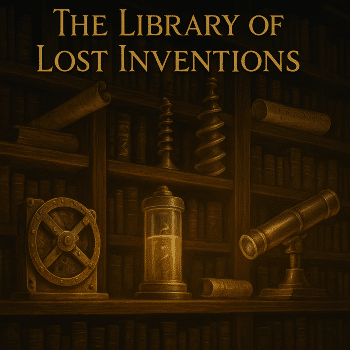
History isn’t a straight line of progress—it’s full of inventions discovered, forgotten, and rediscovered centuries later. From Greek computers to medieval batteries, the Library of Lost Inventions reveals how ideas can vanish in time’s shadows, only to reappear when the world is finally ready.
4 Causes of Dyscalculia
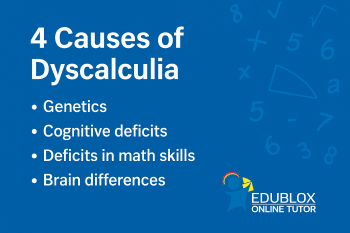
We investigate four possible causes of dyscalculia: genetics, cognitive deficits, gaps in math skills and knowledge, and brain differences.
The Secret Life of Marginalia: What Medieval Notes Reveal
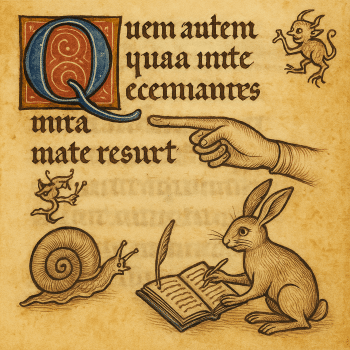
In the margins of medieval books, readers left fingers, snails dueling knights, and scrawled complaints. These marginalia—funny, personal, revealing—show that reading was alive, messy, and full of thought beyond the lines. The scribbles at the edge whisper secrets about how readers beside the page made books mean something unforgettable.
The Mathematics of Forgetting: Ebbinghaus’s Curve Meets Modern AI Predictions
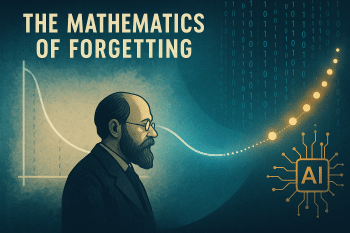
In the 1880s, Hermann Ebbinghaus uncovered the forgetting curve: memory plummets quickly, then levels off. Today, AI refines his insight, predicting not only how fast we forget but when we’ll need to remember again. The mathematics of forgetting reveals something hopeful — memory isn’t chaos, it’s a pattern we can bend.
Dysgraphia Symptoms, Types, Causes, Treatment
Dysgraphia is a neurological learning disability that can affect handwriting, spelling, and the ability to express ideas on paper. It is not simply “messy writing” but a complex challenge involving motor skills, language, and cognition. Early identification and tailored intervention can make a lasting difference.
Cotard’s Delusion: The Syndrome of the Living Dead

Cotard’s Delusion is a rare disorder where people insist they are dead, rotting, or missing organs. Some stop eating, believing corpses need no food. Though treatable, the syndrome raises profound questions: if life depends on the brain’s conviction, then being alive is not just biology — it is belief.
The Orton-Gillingham Approach Explained

The Orton-Gillingham approach is one of the most respected forms of structured literacy for students with dyslexia. But while OG teaches the how of reading, Edublox takes it further—combining OG with cognitive training to address the root causes of reading struggles. The result? Life-changing improvements in reading, confidence, and learning ability.
Phantom Limbs & Phantom Words: Why the Brain Invents Sensations
A missing hand that still itches. Words heard in silence. Phantom sensations reveal how the brain invents reality rather than simply receiving it. From mirror therapy to auditory illusions, science shows perception is part memory, part imagination — and phantoms are windows into how the mind builds the world we live in.
Letter Reversals: Should I Worry or Not? – Ask Sue
Are letter reversals like b/d or p/q normal, or something to worry about? In this Ask Sue column, Sue explains what’s typical, what may signal processing issues, and when parents should step in.
Reading Skills: 8 Types, 4 Stages, 10 Strategies
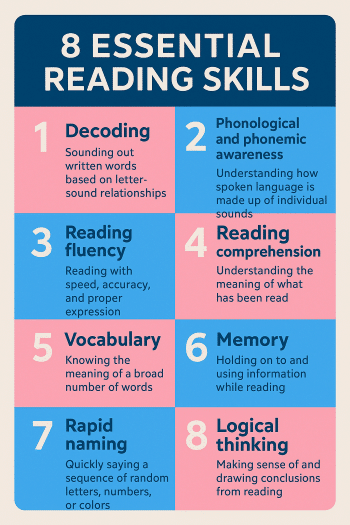
Reading looks simple — but it’s one of the brain’s most complex tasks. This guide breaks down the skills children need to read, what can go wrong, and how to help. Includes a checklist, 8 core skills, 4 stages of development, and 10 proven strategies.
What Is Visual Memory? Types, Importance, Improving

Visual memory helps us remember what we’ve seen — from words on a page to patterns and shapes. This article explores the types of visual memory, its vital role in reading, writing, math, and attention, and how it can be trained and improved.
Dyslexia: Signs, Causes, Myths, Diagnosis, Support
Dyslexia affects up to 1 in 5 people and often goes undiagnosed. This comprehensive guide explains the signs, causes, and myths, along with diagnosis and intervention strategies that truly help. Whether you’re a parent or teacher, you’ll find practical insights and hope.