Skip to content
Help for learning disabilities
Home
Products & Services
Success Stories
Resources
Dyslexia
Dyscalculia
Cognitive Skills
Reading and Learning Research
Edublox Explained
Edublox Research
Top Success Stories
All Articles
About
About Us
Contact Us
Contact us
Home
Products & Services
Success Stories
Resources
Dyslexia
Dyscalculia
Cognitive Skills
Reading and Learning Research
Edublox Explained
Edublox Research
Top Success Stories
All Articles
About
About Us
Contact Us
Contact us
Sign In
Free Consultation
Register
LD Articles, Resources and Success Stories
Search
Filter by category
All
All
Attention Deficits and ADHD
Cognitive Skills and Study Methods
Dyscalculia and Math Difficulties
Dysgraphia and Writing Problems
Dyslexia and Reading Difficulties
Edublox in the Press and Edublox News
Edublox Research
IQ, Intelligence and Brain Power
Kids' Health
Language Development and Language Learning
Overcoming Learning Barriers: Ask Sue for Help
Overcoming Learning Barriers: Top Success Stories
Parenting, Home and Family
Reading and Learning Research
Teaching Resources
Uncategorized
Unusual and Amazing
What's on for Breakfast, Lunch and Supper?
Showing articles with tag:
dyslexia
|
Clear
1
2
3
4
Dyslexia and Reading Difficulties
Dyslexia Treatment Program for Children
Discover a comprehensive, research-informed approach to dyslexia treatment that goes beyond phonics. This four-pillar model integrates structured instruction, cognitive training, targeted brain development, and foundational learning principles to help children overcome reading challenges.
Read more...
Dyslexia and Reading Difficulties
How Is Dyslexia Diagnosed?
A dyslexia diagnosis requires a full evaluation, not just a single test. Learn what’s involved in screening and assessment, who can diagnose dyslexia, and the steps you can take to support your child afterward.
Read more...
Overcoming Learning Barriers: Ask Sue for Help
Orthographic Dyslexia: Symptoms, Causes, Intervention – Ask Sue
Orthographic dyslexia, also called surface dyslexia, affects children who cannot easily recognize words by sight. This article explains the symptoms, causes, and the role of the brain’s visual word form area, as well as interventions that strengthen visual memory and rapid recall to improve reading.
Read more...
Dyslexia and Reading Difficulties
A Comprehensive History of Dyslexia
The history of dyslexia starts in 1877, nearly 150 years ago, with Adolph Kussmaul. Learn about the roles played by Berlin, Kerr, Morgan, Hinshelwood, Orton, Strauss and Werner, Lehtinen, Kirk, the Education for All Handicapped Children Act, and more.
Read more...
Dyslexia and Reading Difficulties
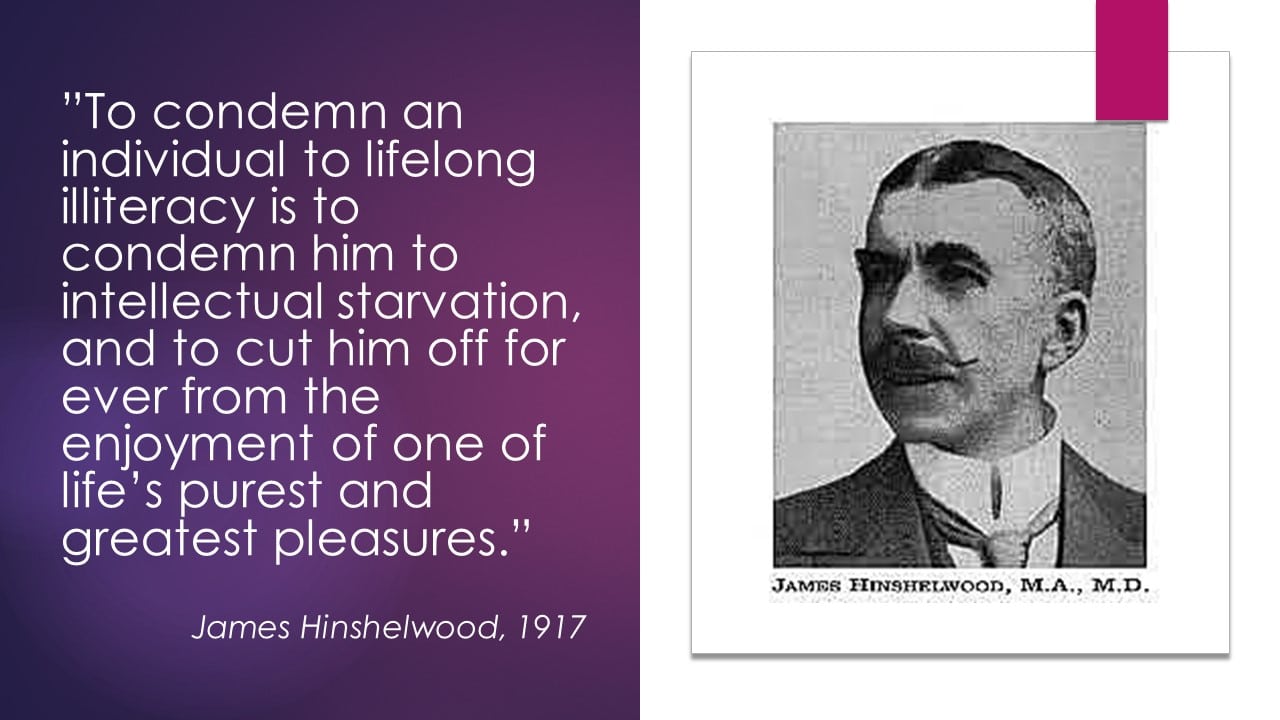
Dyslexia: Biography of James Hinshelwood
James Hinshelwood is considered the father of the study of dyslexia. Long before the term neuroplasticity was coined, he recognized that the brain could adapt through systematic instruction. His groundbreaking work on “congenital word-blindness” anticipated much of modern understanding about dyslexia, making him one of the most visionary figures in the history of reading science.
Read more...
Dyslexia and Reading Difficulties
17 Dyslexia Success Stories from Real Families
Not all dyslexia success stories involve celebrities. These real-life stories of ordinary children and teens overcoming reading struggles prove that with the right support, progress is possible.
Read more...
Dyslexia and Reading Difficulties
Directional Confusion May Be a Sign of Dyslexia
Directional confusion is a common symptom of dyslexia that affects reading, writing, and spatial awareness. Learn how problems with left–right orientation and position in space develop, and how they impact learning.
Read more...
Dyslexia and Reading Difficulties
Dyslexia Symptoms, Early Warning Signs, and Risk Factors
What are the symptoms of dyslexia? Learn how to recognize eight core dyslexia symptoms, spot early warning signs before school starts, understand key risk factors, and explore proven ways to support your child’s reading journey.
Read more...
Overcoming Learning Barriers: Ask Sue for Help
Is Dyslexia Incurable? – Ask Sue
A parent asks if dyslexia is truly incurable after their child’s diagnosis. Sue explains what research shows about neuroplasticity, and how evidence-based teaching and cognitive training can lead to real progress — with age-appropriate reading as an achievable goal.
Read more...
Dyslexia and Reading Difficulties
Dyslexia and the Brain: What Science Reveals
This article dives into the neuroscience of dyslexia, from 19th-century theories to modern imaging studies. It highlights groundbreaking research on neuroplasticity and explores how the brain’s remarkable ability to adapt offers hope for struggling readers. While science continues to investigate the roots of dyslexia, one thing is clear: the human brain has the power to overcome.
Read more...
Dyslexia and Reading Difficulties
Dyslexia in Children: Signs, Support, and Solutions
Dyslexia affects up to 1 in 5 children and can impact reading, spelling, and confidence. Learn how to spot the signs early and support your child with proven strategies rooted in research.
Read more...
Dyslexia and Reading Difficulties
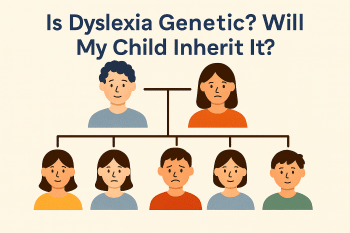
Is Dyslexia Genetic? Will My Child Inherit It?
“Deer momee and dadee… I canot reed.” With these heartbreaking words, a boy named David reveals the pain of dyslexia—and a question many parents ask: Is it inherited? This article explores the science of dyslexia’s genetic roots, the role of environment, and why early support can change a child’s future.
Read more...
1
2
3
4
Contact Us
We use cookies to ensure that we give you the best experience on our website. If you continue to use this site we will assume that you are happy with it.
Ok
Privacy policy