Free Consultation

LD Articles, Resources and Success Stories

What Reading Instruction Can Learn from the Suzuki Method

The Suzuki Method transformed music education through repetition, gradual progression, and layered learning. Discover what modern reading instruction can learn from Suzuki’s approach to mastery and automaticity.

Read more...

How Reading Skills Develop from Birth to Age 7

Reading development begins long before children enter school. Learn how language, cognitive skills, phonological awareness, fluency, and repetition work together to build strong readers.

Read more...

The Hidden Cost of Slow Reading

Many children can decode words accurately yet still struggle to understand what they read. Learn how slow reading increases cognitive load, weakens comprehension, and affects academic performance.

Read more...

Slow Reading in Children: How It Undermines Understanding

Some children read every word correctly but still struggle to understand what they have read. Often, the issue is not accuracy, but the effort required to read. This article explains how slow, effortful reading can interfere with comprehension and what to look out for.

Read more...

Fluency vs. Decoding: Why Both Matter for Reading Success

Many children can read words correctly but still struggle to understand what they have read. The reason often lies in the gap between decoding and fluency. This article explains why both are essential for reading success—and what happens when one is missing.

Read more...

Why Phonics Alone Is Not Enough

Phonics is vital for learning to read, but it is not enough. Many children can decode words yet still struggle with fluency and comprehension. Reading also depends on language and cognitive skills, which phonics alone does not develop.

Read more...

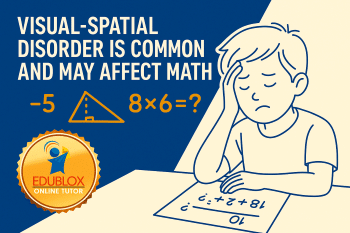
Visual-Spatial Disorder Is Common and May Affect Math

A groundbreaking Columbia study reveals that Nonverbal Learning Disability (NVLD), now being reexamined as a visual-spatial disorder, affects up to 3 million children in the U.S. It often impacts math skills, motor coordination, and social development — yet it remains widely overlooked.

Read more...

The Lifelong Impact of Reading: Strong Skills at 7 Shape Success at 70

Research shows that reading ability at age seven predicts more than school success — it shapes income, career, and wellbeing decades later. A landmark study of 17,000 people found that stronger early literacy skills led to higher earnings and better life outcomes. Reading is not just an academic milestone; it is the foundation for lifelong opportunity.

Read more...

Reading Skills: 8 Types, 4 Stages, 10 Strategies

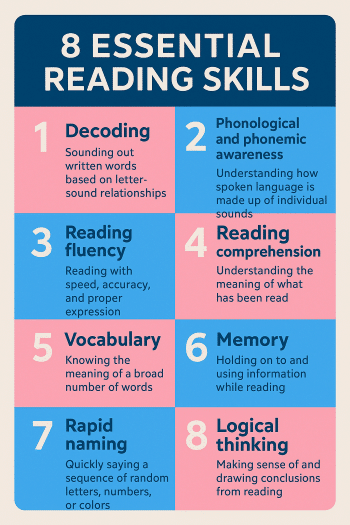
Reading looks simple — but it’s one of the brain’s most complex tasks. This guide breaks down the skills children need to read, what can go wrong, and how to help. Includes a checklist, 8 core skills, 4 stages of development, and 10 proven strategies.

Read more...

40 Reasons Why Reading Isn’t Just Important – It’s Essential

Reading may look like a quiet, passive act — a person, a book, and a cozy chair. However, beneath that stillness is a cognitive fireworks show. Reading lights up multiple brain systems, builds our inner world, and directly shapes our academic, social, and professional success. Here are 40 evidence-based reasons why reading isn’t just important — it’s essential.

Read more...

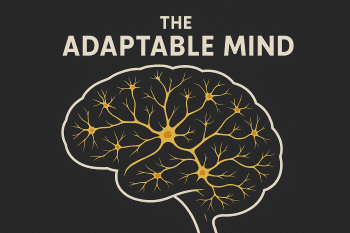
The Adaptable Mind

John Zerilli’s book, The Adaptable Mind: What Neuroplasticity and Neural Reuse Tell Us about Language and Cognition, asks a big question: How does the brain really work? Especially: Does it have special parts for things like language, or does it reuse the same parts for many different things?

Read more...

Why Computer-Based Reading Often Falls Short for Struggling Readers

While educational technology can offer exciting tools, it’s essential to recognize its limitations when used inappropriately — especially for children with reading disabilities. Here’s why computer-based reading often doesn’t work unless carefully designed and supported.

Read more...
Contact Us