Free Consultation

LD Articles, Resources and Success Stories

Everyday Life with Dyscalculia: Beyond the Classroom

Dyscalculia is more than a classroom struggle. It affects everyday tasks like reading clocks, managing money, cooking, and playing games. This article explores the real-life impact of dyscalculia and shows how the right support can turn frustration into confidence, both in school and beyond.

Read more...

Math Anxiety in Children with Dyscalculia

Math anxiety is more than nervousness—it’s a deep-seated fear that often emerges early in children with dyscalculia. This article explores how anxiety and number-based learning difficulties reinforce each other, what signs to look for, and why early recognition can prevent long-term academic and emotional consequences.

Read more...

Cognitive Skills and Math Ability

Math success depends on more than numbers alone. Core cognitive skills such as memory, sequencing, spatial awareness, and vocabulary form the foundation for learning mathematics. When these skills are weak, students may struggle or even develop dyscalculia — but with the right training, they can be strengthened.

Read more...

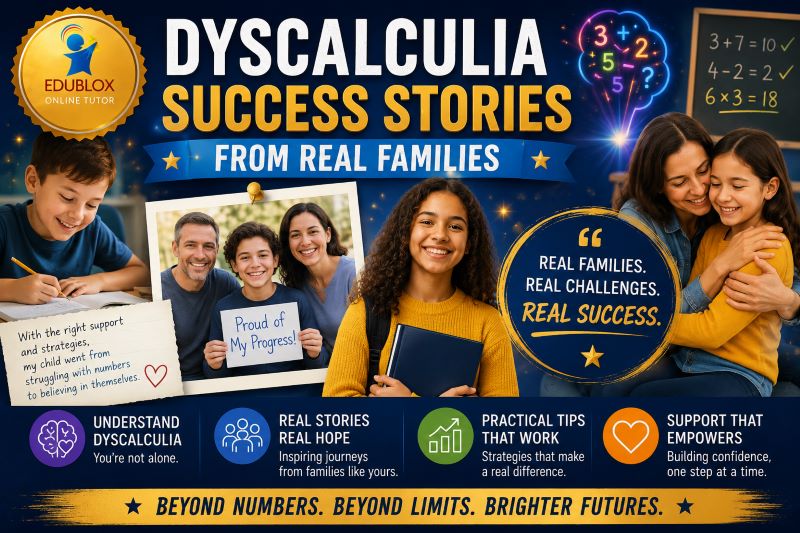
12 Dyscalculia Success Stories from Real Families

Most dyscalculia success stories in the press are about celebrities who succeeded despite their struggles. These 12 stories are different. They come from ordinary families whose children overcame the daily challenges of dyscalculia with the right support — and found new confidence along the way.

Read more...

Dyscalculia Hub

The Dyscalculia Hub brings together everything you need to know about math learning disabilities. From causes and symptoms to treatment, overlaps, research, and real-life stories, this collection offers parents and teachers clear guidance — and hope.

Read more...

The Research and Neuroscience of Dyscalculia

For decades, math difficulties were dismissed as carelessness or poor teaching. Research now shows dyscalculia has clear cognitive and neural roots. This article explores key findings from psychology, neuroscience, and genetics — and why they matter for children struggling with math.

Read more...

The History and Recognition of Dyscalculia

Dyscalculia, a math learning disability as common as dyslexia, has long been overlooked. This article traces its history, global recognition, and why awareness matters.

Read more...

Math Learning Disabilities: Symptoms, Causes, Treatment

Math learning disabilities, also called dyscalculia, affect millions of children and adults worldwide. From struggling with basic arithmetic to difficulties with time, money, and everyday tasks, the impact can be lifelong if left unaddressed. This article explores what dyscalculia is, why numeracy matters, how common math learning disabilities are, their key symptoms and causes, and how targeted interventions — including Edublox’s step-by-step approach — can help students overcome barriers and succeed in math.

Read more...

Dyscalculia and Dyslexia: Overlap and Key Differences

Dyslexia and dyscalculia are two distinct learning disabilities, but they often overlap. While dyslexia affects reading and language, dyscalculia impacts math and number sense. Both can cause frustration and low confidence, yet with accurate identification and targeted intervention, children can make remarkable progress in school and beyond.

Read more...

Severe Dyscalculia: Signs, Challenges, and a Story of Hope

Severe dyscalculia is more than difficulty with math facts — it affects number sense, place value, and even counting. But severe doesn’t mean hopeless. With the right intervention, children can overcome barriers, reduce anxiety, and even enjoy math. Here’s what severe dyscalculia looks like, plus practical ways to help.

Read more...

4 Causes of Dyscalculia

We investigate four possible causes of dyscalculia: genetics, cognitive deficits, gaps in math skills and knowledge, and brain differences.

Read more...

Overcoming Dyscalculia Symptoms: 6 Tried and Tested Steps

Developmental dyscalculia affects 3–10% of students and can severely impact math learning. This article outlines six proven steps — from step-by-step teaching and multi-sensory methods to reducing anxiety and embracing mistakes — to help students succeed in mathematics.

Read more...
Contact Us