
Dyslexia exists on a continuum. For some children, the difficulties are relatively mild. For others, they are profound. In severe cases, learning to read and spell can remain extremely difficult even after years of specialized instruction. These are often children who have tried different programs and interventions but continue to make very little progress.
It is one thing to describe severe dyslexia, however, and quite another to see and hear it. The three children in this video were all Edublox students and provide real-life examples of what severe dyslexia can look like.
Listening to these children read makes the extent of the difficulty much easier to understand. Reading is slow and effortful, and identifying individual words can require enormous concentration. Yet reading is only part of the picture. Severe dyslexia is often just as apparent in a child’s writing and spelling.
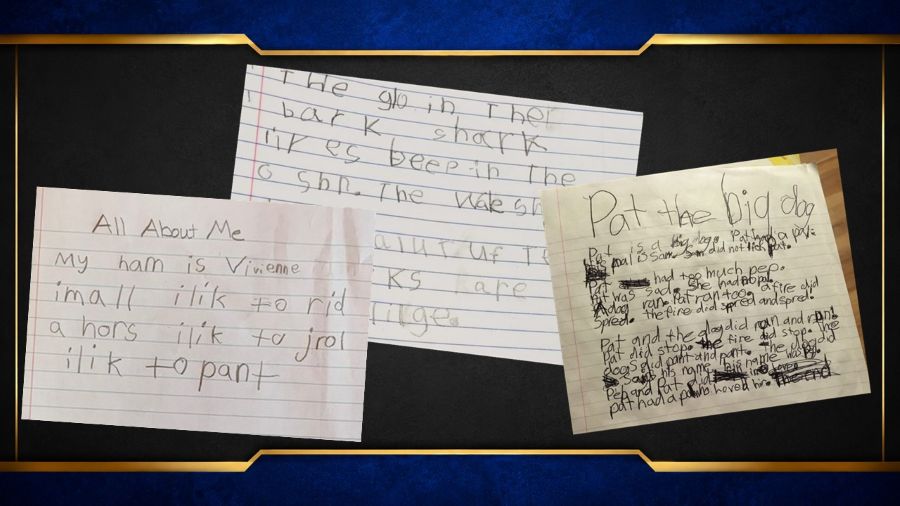
The writing samples below are from the same students. They contain many errors commonly associated with dyslexia, including reversals, omissions, insertions, and phonetic spelling.
Dyslexia exists on a continuum
No two children with dyslexia struggle in exactly the same way or to the same degree. One child may experience relatively mild difficulties and respond fairly quickly to appropriate intervention, while another may continue to struggle profoundly despite years of specialized help.
For children with severe dyslexia, the problem can become more serious as they move through school. Their classmates continue developing reading fluency, vocabulary, and knowledge, while they struggle to keep pace. Over time, the distance between the struggling reader and his or her peers can become increasingly large.
This widening gap is often referred to as the Matthew effect in reading. Children who read well tend to read more, and the additional reading helps them become even better readers. Children who find reading extremely difficult tend to read less and consequently have fewer opportunities to develop the skills, vocabulary, and knowledge that come through reading. The rich get richer, while the poor get poorer.
This means that a child who was already behind in the early grades may be considerably further behind several years later, even after receiving intervention.
But does that mean a child with severe dyslexia who has failed to respond to previous intervention has reached the limit of what he or she can achieve?
From the 1st to the 55th percentile
The first child you saw reading in the video above had been diagnosed with double-deficit dyslexia, meaning that she showed signs of both phonological and orthographic dyslexia.
Her difficulties were profound. Despite three years of previous treatment, she scored in the 1st percentile for reading — the lowest percentile. In practical terms, 99 percent of children her age were reading better than she was.
Professionals who evaluated her said they had never seen dyslexia this severe before. Some even believed that she would never learn to read.
She subsequently started a very intensive Edublox program that continued for nine months. The program did not consist simply of giving her more reading practice. At Edublox, cognitive training is combined with remedial instruction so that the underlying cognitive skills involved in learning are developed alongside reading and spelling skills.
Six months after completing the program, she took the STAR Reading test at school. She scored in the 55th percentile.
She had progressed from the 1st percentile to the 55th percentile in reading.
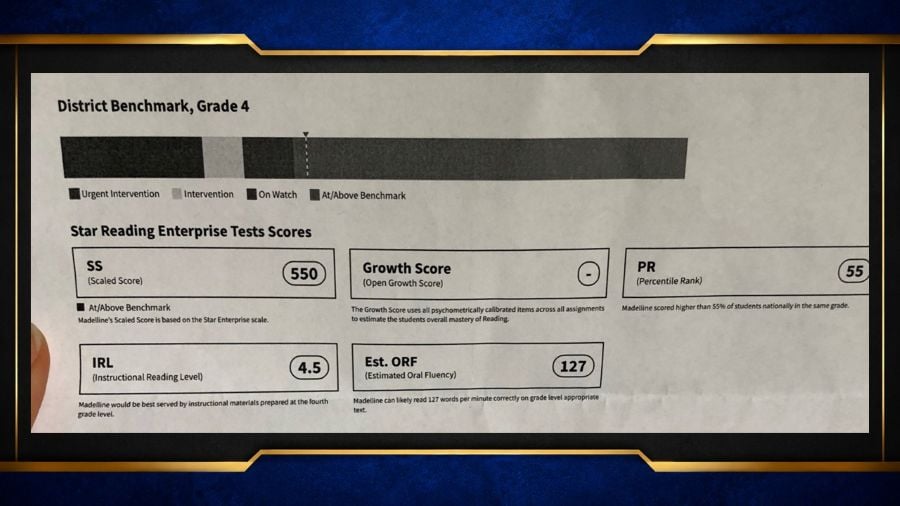
For a child whose reading had remained profoundly impaired despite years of previous intervention, this represented a dramatic change.
Why some children struggle despite intervention
When a child has received specialized reading instruction for years and continues to make little progress, it is easy to assume that the dyslexia is simply too severe. But reading is not an isolated skill, and learning to read requires far more than knowing letters and their sounds.
Successful learning depends on a range of underlying cognitive abilities. Attention allows a child to remain focused on a task. Memory is needed to retain and retrieve information. Processing and sequencing skills help the learner deal with information efficiently and in the correct order, while reasoning enables the child to recognize relationships and make sense of what is being learned.
Reading also depends on the development of phonological and orthographic skills. A weakness in one area can make learning difficult; weaknesses across several areas can make it extraordinarily difficult.
This is why simply providing more practice does not necessarily solve the problem. If important underlying skills remain weak, a child may continue practicing without developing the automaticity required for fluent reading and spelling.
At Edublox, intervention therefore combines cognitive training with remedial instruction. The aim is to address both the academic difficulty that can be seen — such as poor reading or spelling — and the underlying skills that may be contributing to it.
Severe dyslexia does not determine the future
The story of the above student demonstrates just how dramatically reading ability can improve, even when dyslexia is severe and previous interventions have produced very little progress. After three years of treatment, she remained in the 1st percentile for reading. Following the intensive Edublox program, she reached the 55th percentile.
Her progress also challenges the assumption that a child who has struggled for years has necessarily reached the limit of what he or she can achieve. When progress has been limited, we need to consider whether all the skills necessary for successful learning have been adequately addressed.
Severe dyslexia does not have to determine what a child will ultimately be able to achieve.