
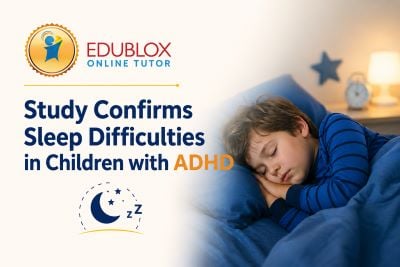
Parents of children with ADHD have long reported that their children struggle to fall asleep, sleep restlessly, and seem tired during the day. Now, a Danish study has provided objective evidence that these concerns may be well-founded.
Researchers from Aarhus University found that children with ADHD not only took longer to fall asleep than their peers but also experienced more disturbed sleep, including less deep sleep. On average, the children with ADHD slept 45 minutes less per night than children in the control group.
“Our study confirms what many parents have experienced, which is that children with ADHD take longer to fall asleep at night,” said Anne Virring Sørensen, PhD, from Aarhus University and a medical doctor at the Child and Adolescent Psychiatric Hospital in Risskov. “With our measurements, we can also see that these children experience more disturbed sleep, including less deep sleep.”
Looking beyond parent reports
Previous research has often relied on parents’ observations of their children’s sleep difficulties. While many studies reported that children with ADHD had trouble falling asleep, objective sleep studies produced inconsistent findings.
The Danish researchers used a different approach. Instead of having children sleep in a specialist sleep laboratory, they attached electrodes for a polysomnography study and allowed the children to sleep in their own homes. This may have provided a more realistic picture of their normal sleep patterns.
The results showed clear differences between the ADHD group and the control group, even when researchers focused only on children whose only diagnosis was ADHD.
An unexpected daytime finding
The researchers also examined daytime sleepiness using multiple sleep latency tests, which measure how quickly a person falls asleep.
Surprisingly, children with ADHD tended to fall asleep faster during the day than children in the control group.
This finding appears contradictory at first glance. ADHD is commonly associated with hyperactivity, yet the children with ADHD showed greater daytime sleepiness. The researchers suggest that poor nighttime sleep may help explain this pattern, though further research is needed to fully understand the relationship.
Why sleep matters
Sleep plays a critical role in attention, memory, learning, emotional regulation, and overall health. Children who consistently get insufficient or poor-quality sleep may struggle to concentrate, follow instructions, remember information, and regulate their behavior.
Because these are also common challenges for children with ADHD, understanding the connection between ADHD and sleep could have important implications for both assessment and treatment.
Many children with ADHD are prescribed medication to help them fall asleep. However, none of the children in this study received sleep medication during the study, allowing the researchers to observe their natural sleep patterns.
An important step forward
According to Sørensen, the findings provide important validation for parents and clinicians who have long suspected a connection between ADHD and poor sleep.
The next step, she says, is to better understand the nature of that relationship and develop more effective interventions.
The study was published in the Journal of Sleep Research.
About the study
- 76 children with ADHD participated in the study.
- The average age of the children was 9.6 years.
- The control group consisted of 25 healthy children.
- Researchers conducted overnight sleep studies (polysomnography) and daytime sleep latency tests.
- The study is the largest to date to combine both methods in children with and without ADHD.
- Researchers from Aarhus University, Aarhus University Hospital Risskov, Rigshospitalet, and the University of Copenhagen collaborated on the project.