When most people think of dyslexia success stories, they picture famous names—celebrities, entrepreneurs, and inventors—who achieved greatness despite their struggles with reading. These tales are inspiring, but they can feel distant and out of reach.
Our students aren’t celebrities. They’re not on red carpets or bestselling book tours. They’re ordinary children, teens, and adults—just like millions of others—who’ve faced the very real and often painful challenges of dyslexia. What makes their stories remarkable is not fame but perseverance. They’ve worked hard, received the proper support, and made meaningful progress. That’s the kind of story we believe the world needs more of.
Why reading matters so much
Reading isn’t just a subject in school. It’s the key that unlocks almost every other subject—math, science, literature, social studies. Whether it’s following instructions, solving word problems, or conducting research, reading is the foundation. Up to 85% of the school curriculum depends on reading.
So what happens when a child isn’t reading on grade level by the end of third grade? Research shows they’re likely to fall behind—and stay behind. Reading struggles compound over time, and many students who fall behind in the early primary years continue to struggle academically throughout their school years and into adulthood.
One of the most common causes of reading failure is dyslexia.
What is dyslexia?
Dyslexia is a specific reading disability. It describes people—bright, curious, capable individuals—for whom reading does not come naturally. According to the Diagnostic and Statistical Manual of Mental Disorders (5th edition), dyslexia is a specific learning disorder that isn’t caused by sensory impairments, intellectual disabilities, neurological damage, or environmental disadvantages. It’s a brain-based difference in how language is processed.
Unlike other medical conditions, dyslexia cannot be treated with medication. It requires a more specialized approach: targeted, evidence-based intervention. The good news? With the right help, many people with dyslexia can overcome their symptoms and become confident, competent readers.
Dyslexia success stories that inspire
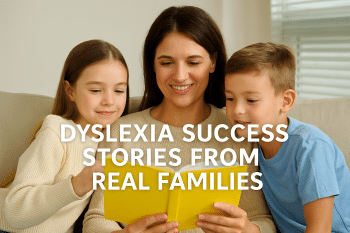
The stories you’re about to read aren’t of movie stars or tech moguls. They are stories of real students—some young, some older—who have faced the daily challenge of reading, spelling, and writing with dyslexia. With hard work, support, and appropriate intervention, they’ve made incredible progress.
Their victories may not make headlines, but they change lives. And they remind us that overcoming the symptoms of dyslexia doesn’t require fame. It requires courage, commitment, and the right kind of help.
Watch: Beating a Reading Disability — A Success Story
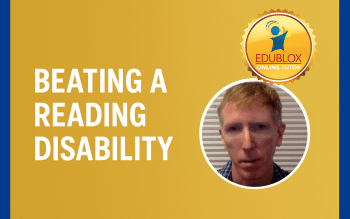
A parent shares how his daughter’s reading improved from being several years behind to catching up with her classmates — a wonderful reminder of what’s possible with the proper support.
Watch: Severe Dyslexia Success Story
Cristiano was diagnosed with double-deficit dyslexia, one of the most severe forms of the condition. With Edublox’s structured program—integrating targeted reading instruction and cognitive training—he made remarkable gains in fluency, confidence, and overall learning.
Story of a Boy Who Overcame Dyslexia and Earned a Master’s Degree

Abraham, a student with dyslexia, failed his fourth grade and did not improve for two years. His mother read about the Edublox system and gave it a try. His improvement was remarkable, and he went on to eventually earn a master’s degree at university.
Watch: Visual Processing Disorder and Dyslexia Success Story
In the video, a mom shares her journey of helping her son beat the symptoms of a visual processing disorder and dyslexia. Visual processing disorder is a neurological condition in which the brain has difficulty interpreting visual information despite normal eyesight. It often coexists with learning difficulties, such as dyslexia, and can affect academic performance and daily activities.
Watch: Student with Severe Dyslexia Improves by 54 Percentiles
Maddie was diagnosed with dyslexia. This diagnosis was later changed to severe dyslexia, and diagnoses of moderate dyscalculia and ADHD were added. On top of that, Maddie’s Full Scale IQ score was 81, which is in the Low Average range. Three years of treatment yielded few results. Finally, Maddie embarked on the Edublox program. Her IQ score increased to 103, and she improved by 54 percentiles in reading.
Read and Watch: Profound Dyslexia and Dyscalculia Success Story
Amy was diagnosed with severe dyslexia and dyscalculia. She got so behind in school that her parents started homeschooling her. She also started with Edublox’s live online tutoring. Amy overcame many obstacles. Her reading improved from being unable to read to the 46th percentile on the 8th-grade level. Her mom, Sandy, shares Amy’s progress over three years.
Watch: Dyslexia Treatment Yields Long-term Results
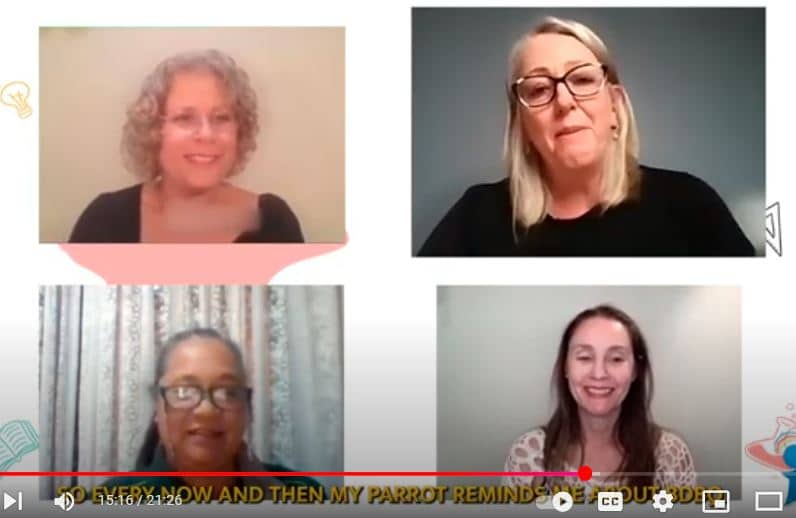
Three parents from different parts of the world shared their children’s success stories with dyslexia during a webinar. Two students completed treatment over a decade ago and continued to grow academically. The third was still undergoing treatment.
From Dyslexia Diagnosis to Academic Success
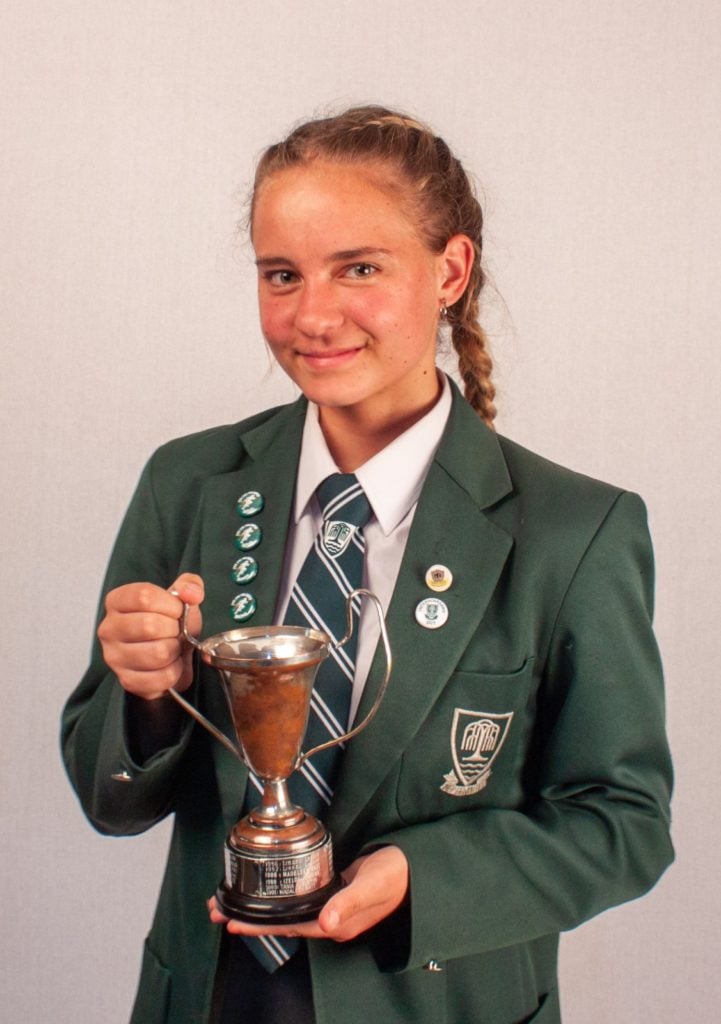
When Zancha was diagnosed with dyslexia, school became a daily struggle. Her reading skills lagged two years behind her peers, and her confidence was slipping away. Sue from Edublox offered a realistic but hopeful path forward: no quick fixes but a program grounded in patience, science, and structured support.
Boy’s Reading Efficiency Improved by 12 Years. Two Decades Later…
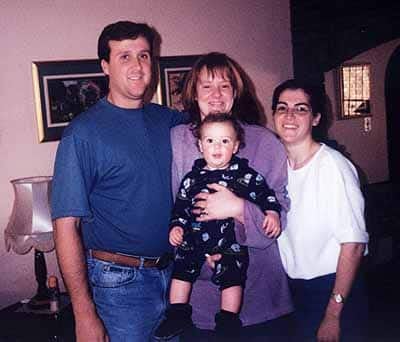
Dyslexia turned school into a nightmare for Werner Louw. Because his IQ was tested at 148, the Louw parents found it strange that their son, Werner, would struggle at school. And battle he did. The written word remained a closed book to him. Although his parents went from pillar to post trying to solve his reading problem, nothing seemed to help. Read about his Edublox journey and the long-term results.
Watch: Dyslexic Student Learns More in 13 Weeks than Her Entire Life
Vivienne is an 11-year-old American girl who was adopted from China at the age of five. Her mother, Susan, tried many avenues to help Vivienne catch up on her developmental delays. While progress was made in certain areas, Vivienne’s academics continued to lag. They embarked on the Edublox program, and in 13 weeks, Vivienne learned more than she had in her entire life.
Story of a Girl Who Overcame Dyslexia and Pursued a Master’s Degree
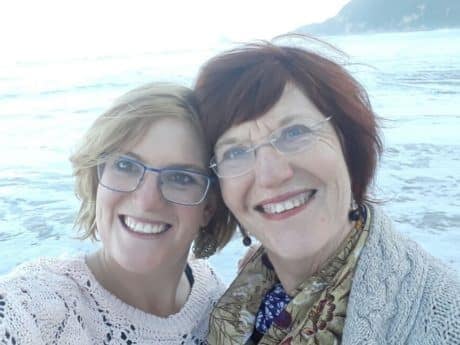
After her daughter’s dyslexia diagnosis in 4th grade, Elize recalled hearing about Edublox on the radio and went for training to help her. Marie-Louise passed 12th grade with four distinctions, passed her BA degree in Social Work with good marks, and is pursuing her MA degree in Social Work.
Watch: Student with Dyseidetic Dyslexia Improves by 26 Percentiles
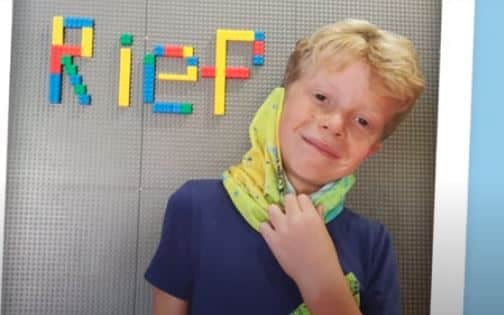
A developmental optometrist contacted Edublox and requested help for his 9-year-old patient who struggled with dyseidetic dyslexia – also called orthographic dyslexia and surface dyslexia. Rief, the patient, improved from the 34th to the 60th percentile in reading. His grades are outstanding.
Dyslexic Becomes an Honors and Advanced Placement Student

A mother in Fullerton, United States, shares her dyslexic daughter’s progress after two weeks on the Edublox program. Her daughter started to love reading, and her handwriting improved overnight. Four years later, her daughter is in her first year of high school, taking honors English and geometry, as well as AP (Advanced Placement) History.
Dyslexia and Visual Perceptual Deficits: A Case Study

Hannah was diagnosed with severe dyslexia. Follow her progress after starting Edublox, as witnessed by an occupational therapist, her mom, and a remedial practitioner. She has made “excellent and pleasing improvement in areas of sensory-motor function as well as visual perception” and “remarkable progress in terms of her academic and emotional development.”
Boy with Dyslexia Improves from the 40s to 75 in Reading

Jeremie, a boy in Canada, had been struggling to learn to read and write since kindergarten. This had a significant impact on his self-esteem. Then, in Grade 2, Jeremie was diagnosed with dyslexia. After testing various dyslexia methods that failed to help, Jeremie’s mom, Laura Trudel, heard about Edublox. After only three weeks, Jeremie began to show progress.
Girl with Dyslexia Noticeably a More Confident Reader
Anne, a girl in Herts, UK, was showing dyslexia symptoms. She scored a reading age one year below the national average. After doing Edublox, Anne scored a reading age of 10.02 years, compared to a chronological age of 9.6.
Student with Dyslexia Improves His Language Arts Score by 21%
Preneil was diagnosed with dyslexia at the age of thirteen. The diagnosis caused his self-esteem to suffer and filled his mom with anger, annoyance, sadness, and despair. After Preneil failed English, his mom discovered Edublox. His Language Arts score improved by 21%, he achieved an A in math and was allowed to enter university.
How Edublox can help
Edublox is more than tutoring—it’s a research-informed educational method that combines cognitive training with structured reading instruction, grounded in proven learning principles. We specialize in supporting students with phonological and orthographic dyslexia, from mild to severe, through personalized live online tutoring.
Edublox helps students become lifelong learners and empowers them to achieve their highest educational goals. While Edublox is not a quick fix, it can permanently alleviate the symptoms of learning disabilities like dyslexia.
Ready to take the next step?
Book a free consultation and let’s talk about your child’s learning needs.
Edublox is proud to be a member of the International Dyslexia Association (IDA), a leading organization dedicated to evidence-based research and advocacy for individuals with dyslexia and related learning difficulties.