Skip to content
Help for learning disabilities
Home
Products & Services
Success Stories
Resources
Dyslexia
Dyscalculia
Cognitive Skills
Reading and Learning Research
Edublox Explained
Edublox Research
Top Success Stories
All Articles
About
About Us
Contact Us
Contact us
Home
Products & Services
Success Stories
Resources
Dyslexia
Dyscalculia
Cognitive Skills
Reading and Learning Research
Edublox Explained
Edublox Research
Top Success Stories
All Articles
About
About Us
Contact Us
Contact us
Sign In
Free Consultation
Register
LD Articles, Resources and Success Stories
Search
Filter by category
All
All
Attention Deficits and ADHD
Cognitive Skills and Study Methods
Dyscalculia and Math Difficulties
Dysgraphia and Writing Problems
Dyslexia and Reading Difficulties
Edublox in the Press and Edublox News
Edublox Research
IQ, Intelligence and Brain Power
Kids' Health
Language Development and Language Learning
Overcoming Learning Barriers: Ask Sue for Help
Overcoming Learning Barriers: Top Success Stories
Parenting, Home and Family
Reading and Learning Research
Teaching Resources
Uncategorized
Unusual and Amazing
What's on for Breakfast, Lunch and Supper?
Showing articles with tag:
memory
|
Clear
1
2
Cognitive Skills and Study Methods
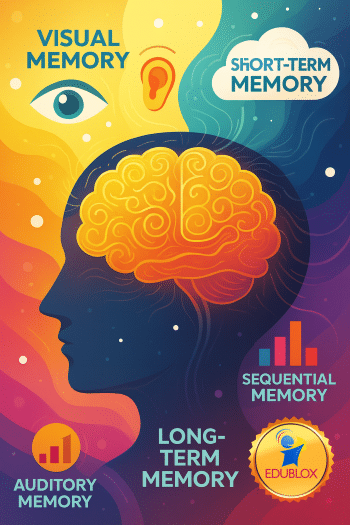
Memory Explained: 17 Types and How to Improve Them
Memory isn’t one skill but many. From sensory and short-term to visual, auditory, sequential, and more, each type plays a role in learning. This guide explains 17 forms of memory and how they can be improved through training.
Read more...
Cognitive Skills and Study Methods
What Is Visual Memory? Types, Importance, Improving
Visual memory helps us remember what we’ve seen — from words on a page to patterns and shapes. This article explores the types of visual memory, its vital role in reading, writing, math, and attention, and how it can be trained and improved.
Read more...
Cognitive Skills and Study Methods
4 Proven Ways to Improve Working Memory
Working memory is increasingly recognized as a crucial cognitive skill, and by improving our working memory, we can realize gains in key areas, from school to work to retirement. Here are a few ways to improve your child’s (or your own) working memory.
Read more...
Cognitive Skills and Study Methods
Short-Term Memory: What It Is, How It Works, Improving (Program Included)
Short-term memory holds a small amount of information in the mind for a few seconds. Short-term memory is limited to about seven items and will be lost in about fifteen seconds unless the information is rehearsed.
Read more...
Cognitive Skills and Study Methods
Long-Term Memory: What It Is, Types, Ways to Improve
Long-term memory is the memory process that takes information from the short-term memory store and creates long-lasting memories. Learn more about the types, stages, and how to improve.
Read more...
Cognitive Skills and Study Methods
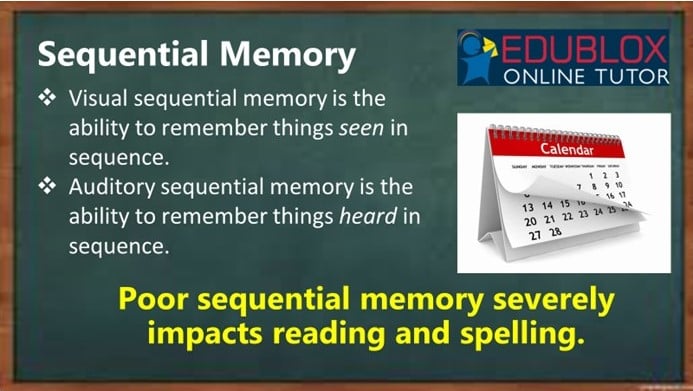
Sequential Memory: Definition, Importance, Overcoming Deficits
Sequential memory requires items to be recalled in a specific order. In saying the days of the week, months of the year, a telephone number, the alphabet, and counting, the order of the elements is paramount.
Read more...
Cognitive Skills and Study Methods
16 Cognitive Skills that Matter, How to Improve Them
Cognitive skills, also called cognitive abilities, cognitive functions, or cognitive capabilities, are mental skills used in acquiring knowledge, manipulating information, reasoning, and problem-solving.
Read more...
Cognitive Skills and Study Methods
8 Reasons Why Working Memory Is Important
Working memory is key to learning. How good this is in someone will either ease their path to learning or seriously prevent them from learning. Here are eight ways children use working memory to learn.
Read more...
Cognitive Skills and Study Methods
Auditory Memory: Importance, Test, Overcoming Deficits
Auditory memory involves taking in information that is presented orally, processing that information, storing it in one’s mind, and then recalling what one has heard. Basically, it involves the skills of attending, listening, processing, storing, and recalling.
Read more...
IQ, Intelligence and Brain Power
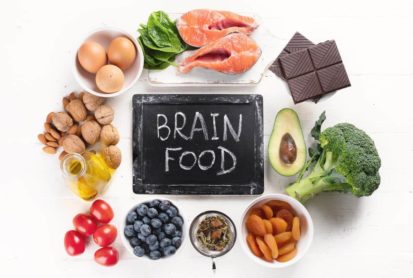
10 Brain Foods to Boost Memory and Concentration
Research on so-called “brain foods” shows that some chemicals in the foods we eat go right to our brain cells. These ten foods have shown to improve memory and concentration.
Read more...
Reading and Learning Research
Memory Problems: Why Learning Techniques Are “Less Successful”
“Children, it’s almost time to go home. So please write down your homework, put your books away, and line up at the door.” Sounds simple and straightforward. So why is Johnny already lined up at the door when his books are all over his desk?
Read more...
Cognitive Skills and Study Methods
Theories of Forgetting: How and Why We Forget
Can you remember the name of your first grade teacher? Certainly the information was stored at one time ― the teacher was a central figure in your life for nearly a year. If you can’t recall the name, is it still somewhere in your long-term memory?
Read more...
1
2
Contact Us
We use cookies to ensure that we give you the best experience on our website. If you continue to use this site we will assume that you are happy with it.
Ok
Privacy policy